A new climate assessment has delivered a stark warning to the global coffee industry: rising temperatures are adding weeks of harmful heat to the world’s most important coffee-growing regions. The findings, released by Climate Central, show that human-driven warming is significantly increasing the number of days each year that exceed optimal temperature thresholds for coffee cultivation.
For an industry already grappling with price volatility, supply constraints, and shifting weather patterns, the implications are structural—not cyclical. The data suggests that climate pressure on coffee production is intensifying, with direct consequences for yield, quality, farmer livelihoods, and long-term supply security.
Heat Stress Is No Longer Occasional — It’s Structural
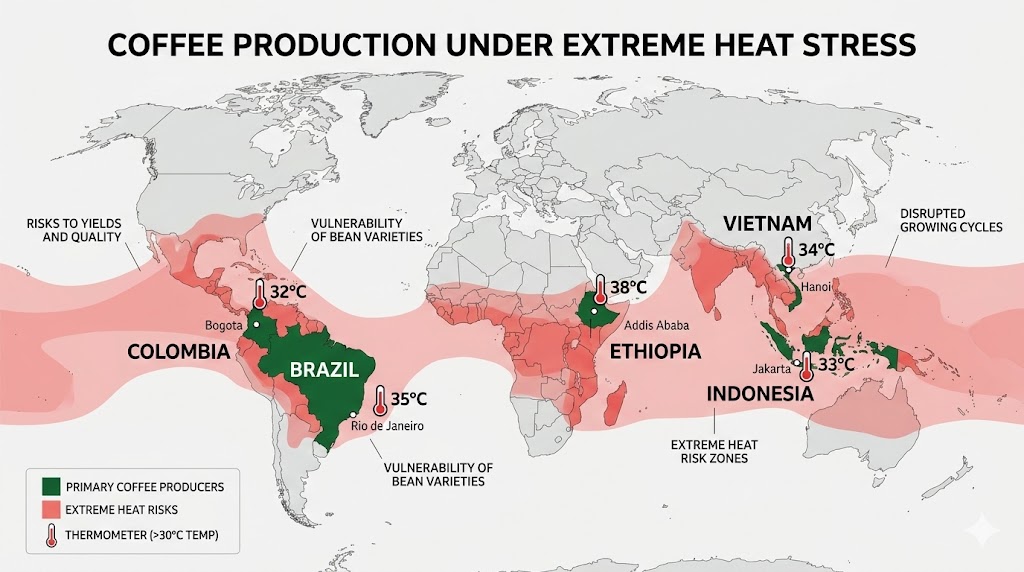
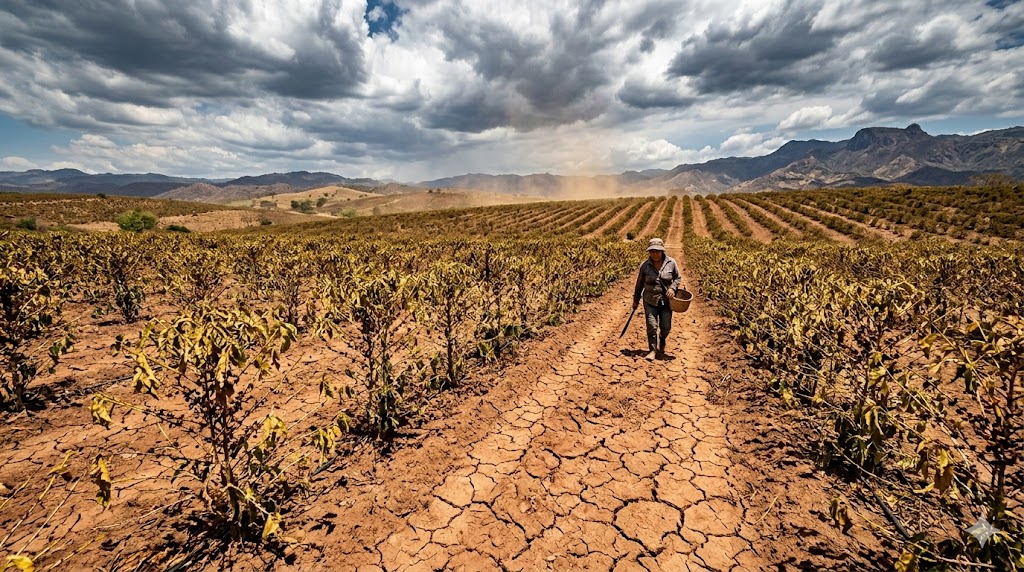
Coffee, particularly arabica, is highly temperature-sensitive. Optimal growing conditions generally range between 18°C and 24°C. Once temperatures consistently rise above 30°C (86°F), physiological stress begins to impair flowering, fruit development, and bean maturation.
According to the analysis, major producing countries are now experiencing dozens of additional “heat-harm” days annually due specifically to climate change. In some regions, the increase represents multiple extra weeks per year of damaging temperatures compared to a world without human-induced warming.
This trend is not theoretical. It is measurable, accelerating, and geographically widespread.
Major Producers Under Intensifying Pressure
The world’s largest coffee producers are among the most exposed.
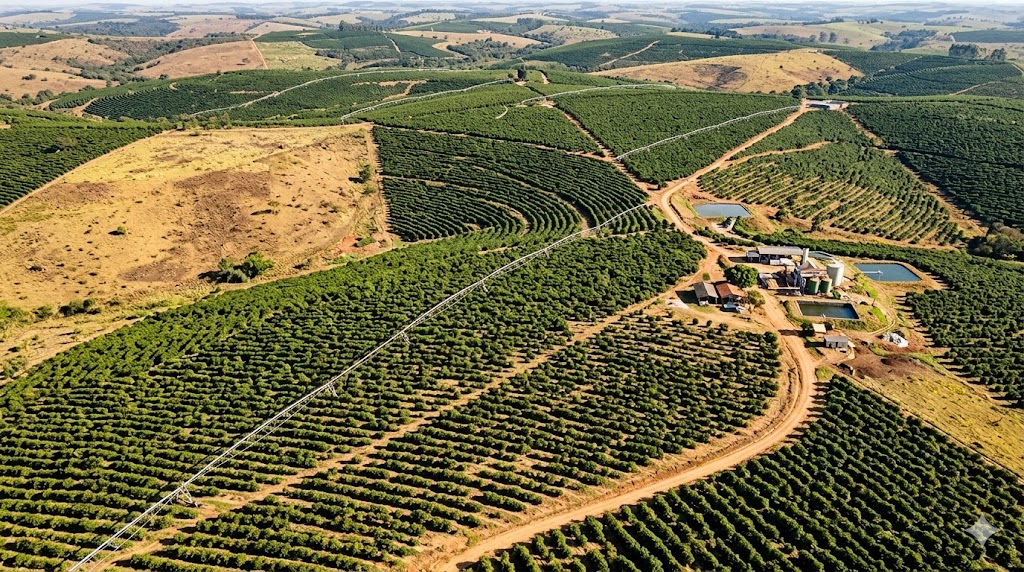
In Brazil, which accounts for roughly one-third of global coffee output, researchers found a significant rise in days exceeding critical heat thresholds. The country’s traditional arabica belt, particularly in Minas Gerais and São Paulo states, has already faced repeated drought-heat cycles in recent seasons. The added thermal stress compounds risks of biennial production swings and crop failure.
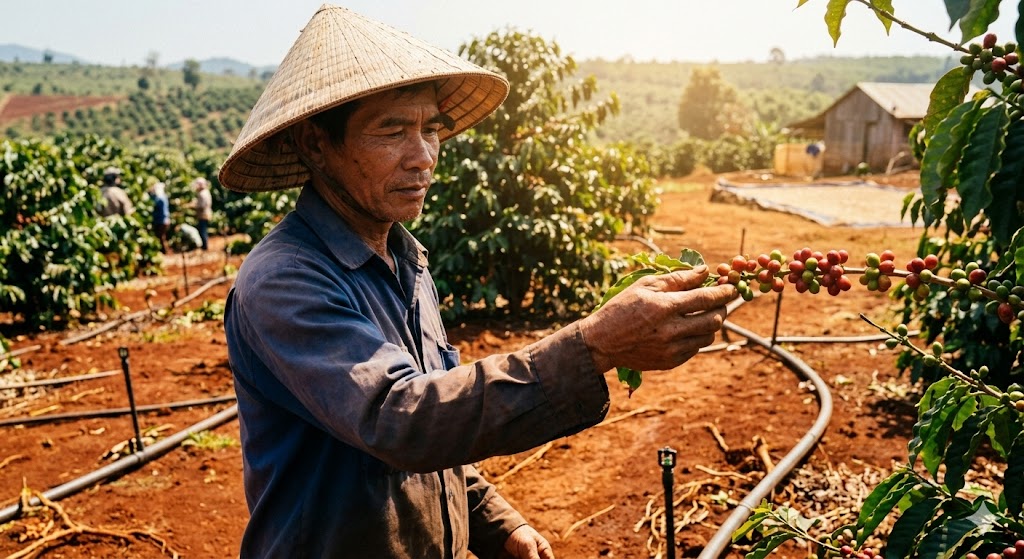
Vietnam, the leading robusta producer, is also seeing an increase in extreme heat days. While robusta tolerates higher temperatures better than arabica, prolonged exposure above 30–32°C still reduces cherry development, accelerates ripening unevenly, and increases irrigation demand in already water-stressed regions such as the Central Highlands.
In Latin America, Colombia faces similar stress. Although its mountainous terrain provides altitude buffering, rising base temperatures are shrinking the band of ideal cultivation zones. Farmers are gradually shifting plantations upslope, but arable land at higher elevations is limited.
East Africa is not spared. Ethiopia—the genetic birthplace of arabica—has seen growing temperature variability affecting both wild and cultivated coffee. Changes in microclimates threaten biodiversity and long-term resilience of heirloom varieties.
Meanwhile, in Indonesia, a combination of rising heat and altered rainfall patterns is increasing fungal disease pressure alongside heat stress, compounding agronomic risks.
Beyond Yield: Quality and Market Implications
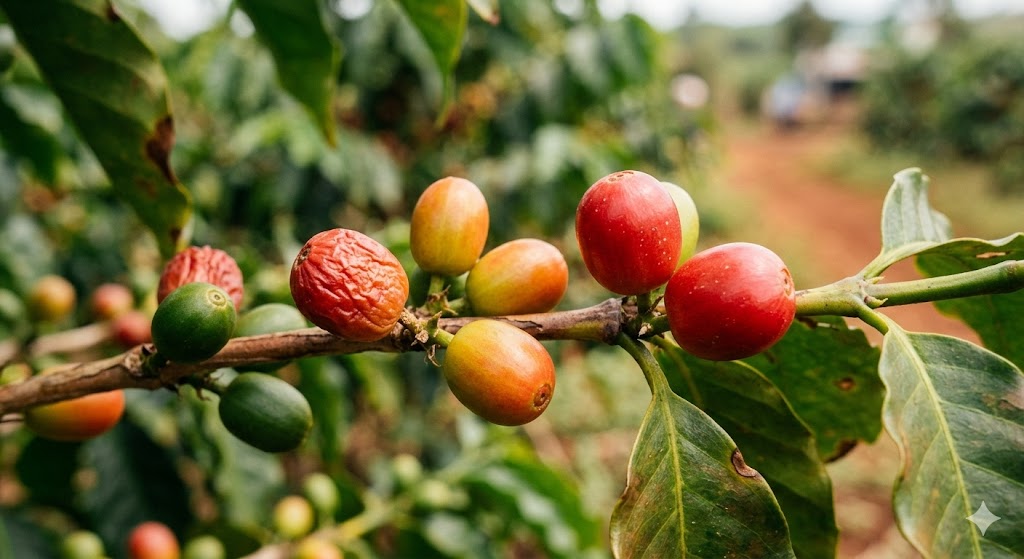
Heat affects more than production volumes. It directly influences cup quality.
Higher-than-optimal temperatures disrupt sugar accumulation in coffee cherries, often resulting in flatter flavor profiles and lower acidity complexity. For specialty markets—where differentiation and sensory quality command premiums—this represents a material threat.
Prolonged heat also shortens the maturation period, leading to smaller bean size and inconsistent grading. In commercial markets, that translates into greater sorting costs and potential price discounts.
As climate stress intensifies, the industry may face a paradox: rising global demand for coffee paired with increasing constraints on high-quality supply. That imbalance is already reflected in heightened volatility in both arabica and robusta futures over recent seasons.
Water, Irrigation, and Rising Production Costs
Temperature increases rarely occur in isolation. They are often accompanied by shifts in precipitation patterns.
Hotter conditions increase evapotranspiration rates, raising water requirements precisely when rainfall becomes less predictable. Producers are investing more heavily in irrigation infrastructure, water storage systems, and soil moisture retention practices.
However, these adaptations require capital. Large commercial estates may absorb such investments. Smallholder farmers—who account for the majority of global coffee production—face tighter margins and higher vulnerability.
In regions where irrigation is not feasible, yield variability is becoming more pronounced. That instability feeds directly into global supply uncertainty.
Geographic Shifts Are Likely
One of the clearest long-term implications is geographic redistribution.
As low-altitude regions become less suitable, cultivation will continue migrating to higher elevations where temperatures remain within viable thresholds. Yet this transition is constrained by land availability, ecological protection zones, and competing agricultural uses.
Moreover, upslope expansion can lead to deforestation pressures if not carefully managed, creating a feedback loop that further exacerbates climate change.
Adaptation Strategies: Necessary but Not Sufficient
Producers and researchers are responding with multiple adaptation strategies:
- Developing heat-tolerant and drought-resistant coffee varieties
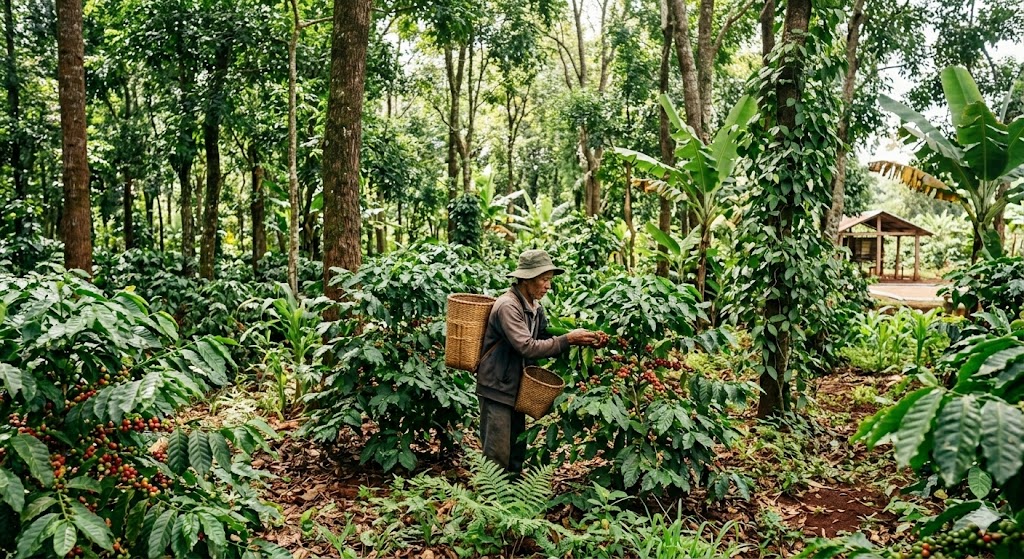
- Expanding shade-grown systems to moderate canopy temperatures
- Improving soil health to enhance moisture retention
- Integrating agroforestry models for climate buffering
While promising, these measures mitigate rather than eliminate risk. If warming trends continue at current rates, adaptation costs will escalate, and some traditional growing regions may become economically unviable.
What This Means for the Coffee Industry
The new data reinforces a critical reality: climate change is no longer a peripheral sustainability issue for coffee—it is a core supply-chain risk.
For traders and roasters, climate modeling is becoming as important as traditional crop forecasting. For investors, exposure to coffee-linked assets now requires integrating climate volatility into risk assessment frameworks. For producing nations, agricultural policy must increasingly align with climate resilience planning.
The coffee sector’s global footprint makes it uniquely exposed to environmental shifts. With demand projected to grow steadily over the coming decade, structural heat stress introduces a tightening dynamic that could support elevated price floors while increasing short-term volatility.
A Turning Point for Global Coffee
The analysis from Climate Central does not suggest immediate collapse of global coffee production. However, it signals a decisive turning point. The industry is entering a period where climate pressure is persistent, measurable, and economically consequential.
The question is no longer whether warming will affect coffee production—it already is. The strategic challenge now is scale: how rapidly adaptation can expand relative to the pace of rising heat.
For producers, traders, and consumers alike, the future of coffee will increasingly depend on climate resilience as much as agronomic expertise.