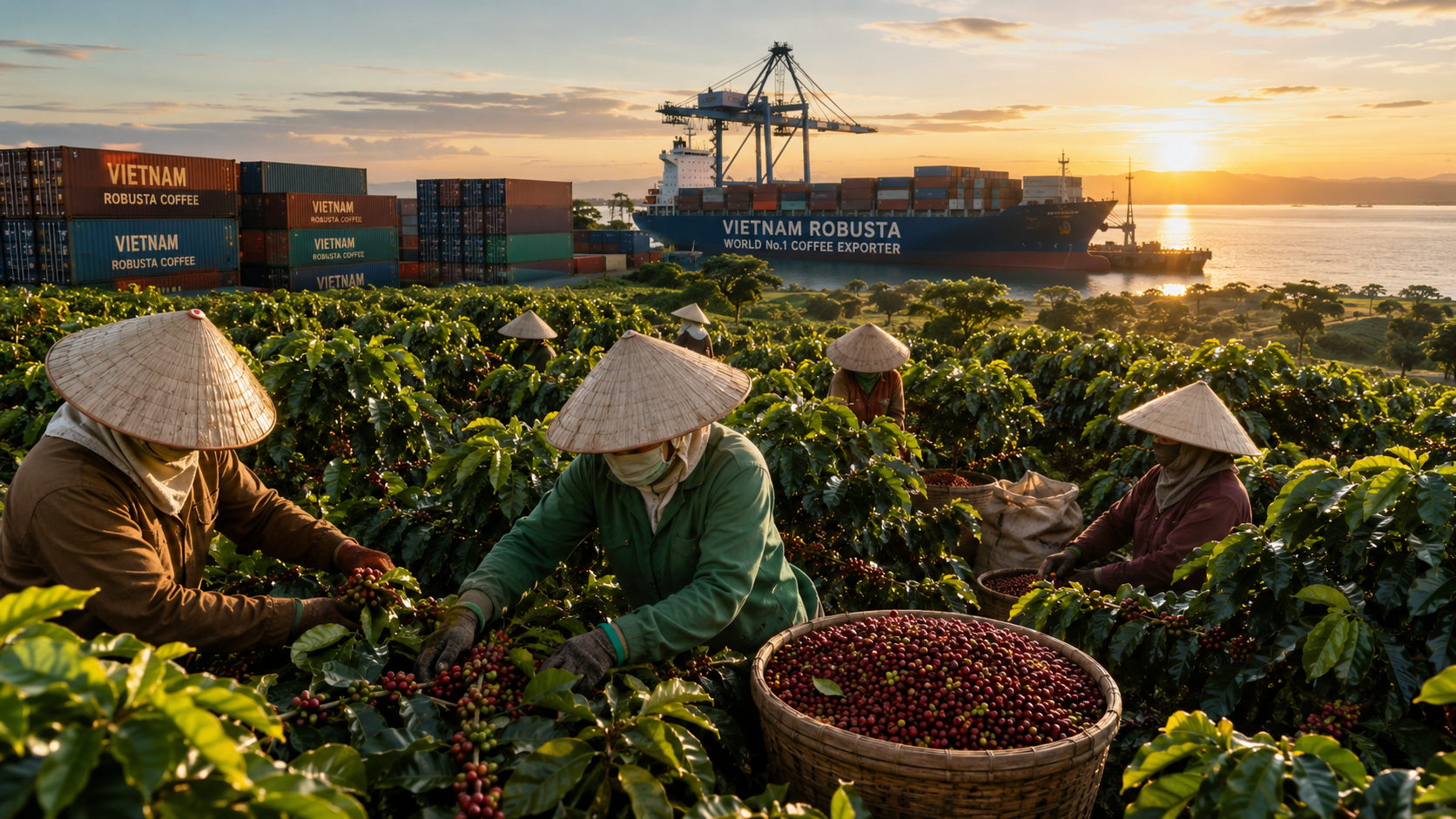
Vietnam Strengthens Its Position as the World’s Robusta Powerhouse
The global coffee market is entering a new phase of transformation, and Vietnam is at the center of it.
According to the latest data from the International Coffee Organization (ICO), global robusta coffee exports surged to an all-time high of 5.5 million bags in March 2026, marking a remarkable 24% increase compared to the same period last year. The milestone not only highlights the growing importance of robusta in the global coffee supply chain but also reinforces Vietnam’s role as the undisputed leader of the segment.
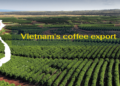
Vietnam alone exported approximately 3.7 million bags of robusta coffee during the month, accounting for more than 67% of total global robusta exports. This represents one of the largest monthly export volumes ever recorded by the country and further cements Vietnam’s dominance in the international coffee trade.
Record-Breaking Robusta Exports Reflect Growing Global Demand
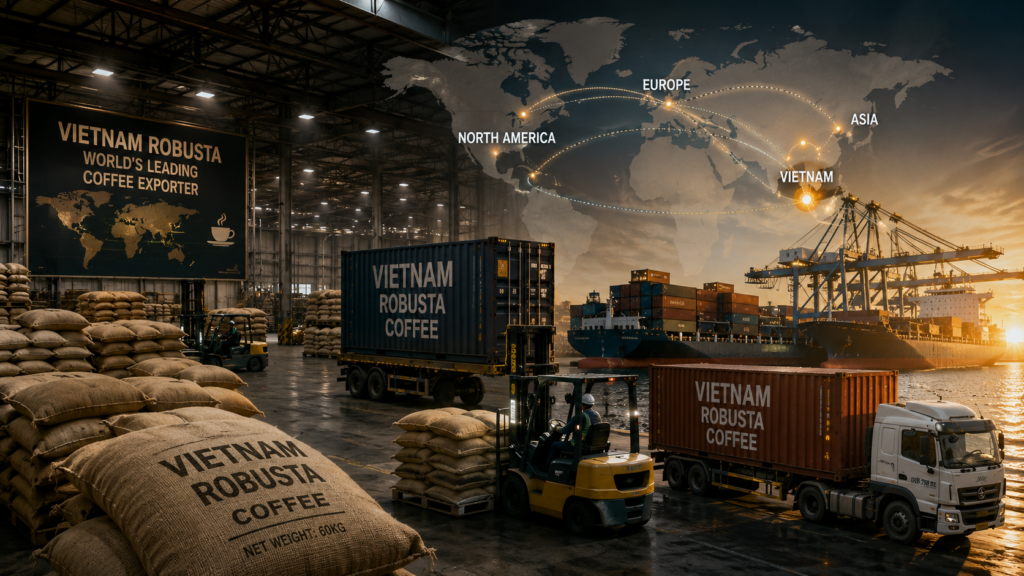
While arabica coffee continues to face production challenges in several major producing countries, robusta has emerged as a key growth engine for the global coffee industry.
The sharp increase in robusta exports comes amid rising demand from coffee roasters, instant coffee manufacturers, and large beverage brands seeking more cost-effective sourcing solutions. Global consumers are increasingly embracing stronger flavor profiles and caffeine-rich blends, helping robusta gain market share in both developed and emerging markets.
Industry analysts point out that Vietnam’s strong export performance was supported by a larger 2025-2026 harvest and the release of delayed shipments following the Lunar New Year holiday period. The combination of favorable production levels and strong international demand created ideal conditions for export growth.
Global Coffee Exports Continue to Expand
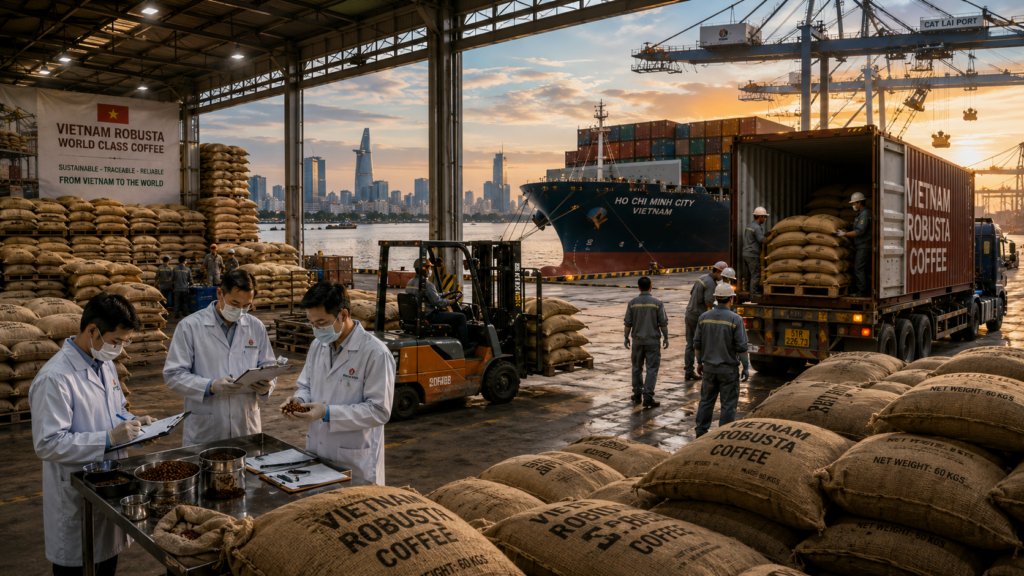
Beyond robusta, total global coffee exports reached 13.6 million bags in March 2026, representing a 1.6% year-over-year increase. During the first six months of the 2025-2026 coffee season, worldwide coffee exports climbed to 70.9 million bags, up 3.3% compared to the previous season.
Green coffee remains the dominant traded product, accounting for more than 85% of global coffee exports. Meanwhile, soluble coffee and roasted coffee continue to gain momentum, supported by changing consumer preferences and increasing demand for convenience-focused coffee products.
Vietnam has also expanded its influence in the soluble coffee sector. For four consecutive months, the country has ranked as the world’s largest exporter of instant coffee, surpassing traditional competitors such as Brazil and India.
Arabica Exporters Face Mounting Challenges
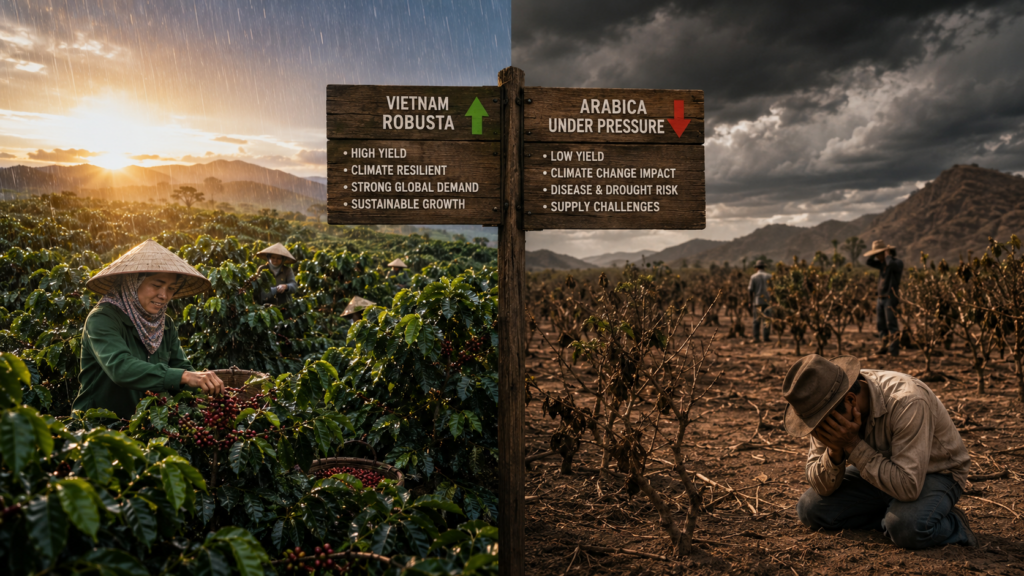
While robusta exports are setting records, several major arabica-producing regions are experiencing significant headwinds.
Colombian washed arabica exports fell sharply during March, reflecting declining domestic production and unfavorable weather conditions. Brazil, the world’s largest coffee producer, also recorded another month of declining natural arabica exports as production cycles normalized following previous bumper harvests.
As a result, total global arabica exports dropped by more than 13% year-over-year in March. The share of arabica in global green coffee exports has consequently declined, while robusta continues to gain ground.
This shift highlights a broader trend reshaping the coffee industry: robusta is no longer viewed merely as a blending component but increasingly as a strategic product category with growing commercial value.
Asia-Pacific Emerges as the Fastest-Growing Export Region
The Asia-Pacific region delivered some of the strongest export growth globally, with coffee shipments increasing more than 13% in March. Vietnam was the primary driver behind this expansion, posting its highest March export volume on record.
Coffee market observers estimate that Vietnam’s 2025-2026 crop could exceed 31 million bags, supported by improved yields and favorable growing conditions. Although official production figures have yet to be finalized, export performance throughout the season suggests a substantial increase in available supply.
By the midpoint of the current crop year, Vietnam had already exported nearly 18 million bags of coffee, the highest six-month total in its history.
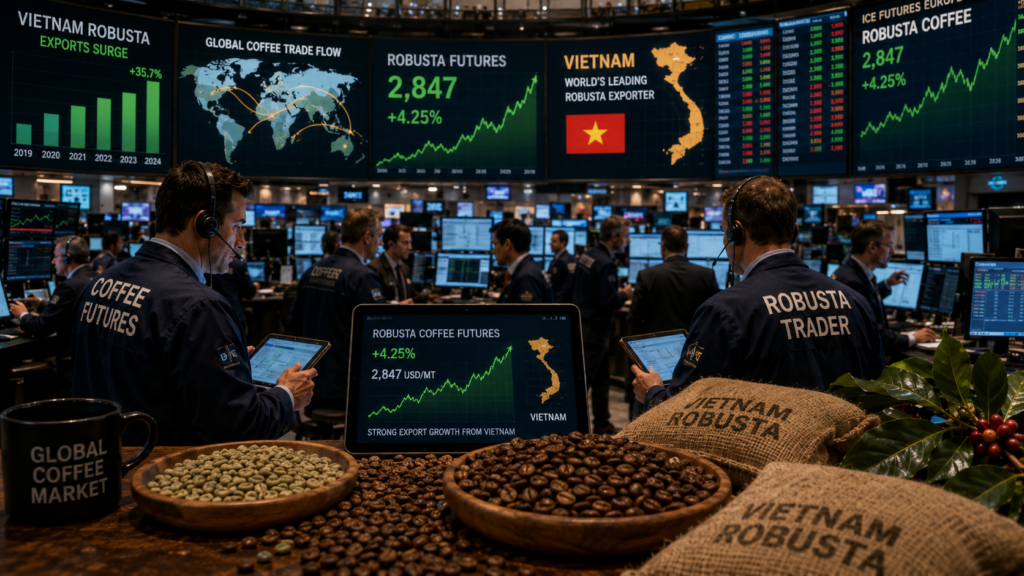
What This Means for the Global Coffee Market
The latest ICO figures reveal more than just strong export numbers—they signal a changing balance within the global coffee industry.
Vietnam’s leadership in robusta exports is becoming increasingly influential as coffee companies diversify sourcing strategies and adapt to shifting consumer demand. At the same time, supply constraints in key arabica-producing countries are accelerating the market’s reliance on robusta beans.
For coffee traders, roasters, importers, and investors, the message is clear: robusta is playing a larger role than ever before in shaping global coffee flows, pricing dynamics, and future growth opportunities.
As global consumption continues to rise and supply patterns evolve, Vietnam is poised to remain one of the most critical forces driving the future of the coffee industry.