The global coffee derivatives market in 2026 is entering a new era. Coffee is no longer traded purely as an agricultural commodity – it is increasingly viewed as a scarcity-driven financial asset, shaped by climate risk, supply stress, and institutional capital.
As structural tightness in Robusta persists and weather uncertainty dominates Arabica, coffee derivatives have become a focal point for traders, exporters, and investors worldwide.

Why the Coffee Derivatives Market Looks Different in 2026
Several long-term forces converge in 2026:
- Climate volatility replaces predictable production cycles
- Persistent tightness in Robusta supply
- Higher financing costs reshape hedging strategies
- Institutional capital treats coffee as a strategic commodity
This creates a market that moves quickly, corrects briefly, and rarely collapses.
Global Coffee Supply and Demand in 2026: A Fragile Balance
Arabica Supply and Permanent Weather Risk
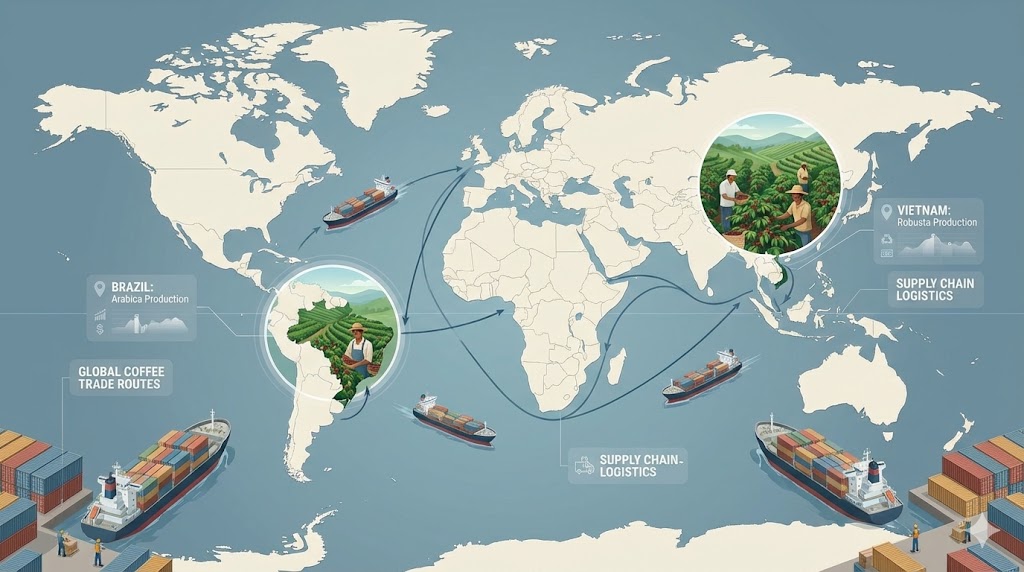
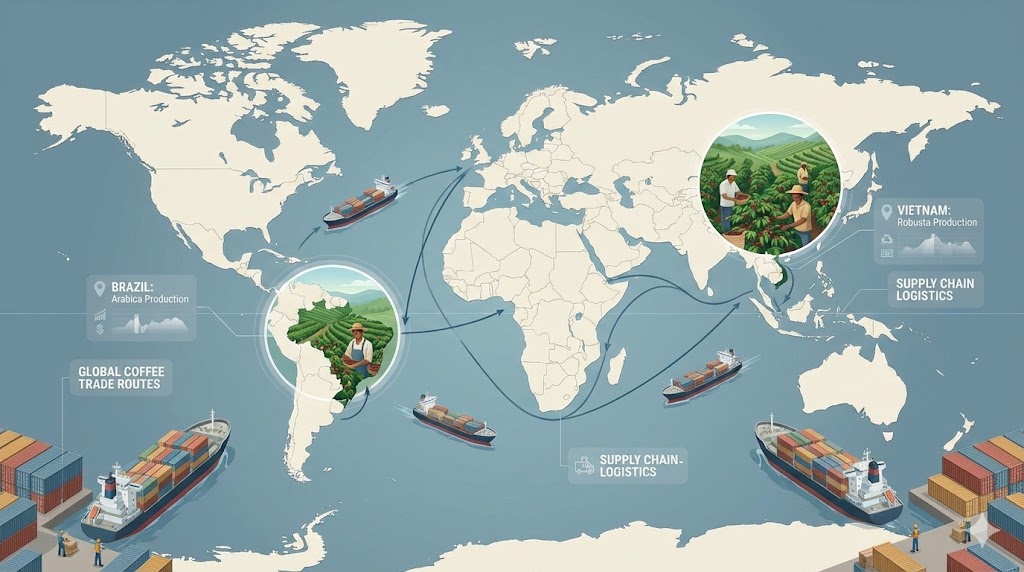
Arabica production remains heavily concentrated in Brazil, making weather the dominant price driver. In 2026, futures markets react strongly to:
- Frost risks
- Rainfall anomalies
- Inventory changes on ICE
Arabica prices increasingly reflect expectations rather than confirmed damage.
Robusta’s Shift from Alternative to Strategic Commodity
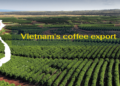
Robusta has fundamentally changed its role. Vietnam, the backbone of global supply, continues to face:
- Limited output growth
- Low inventory buffers
- Strong producer holding behavior
With Indonesia and Africa unable to scale quickly, Robusta has become the anchor of global coffee pricing.
Robusta Coffee Futures in 2026: The Market’s Backbone
Why Institutional Money Favors Robusta
Robusta attracts both:
- Physical buyers hedging long-term supply
- Funds seeking structurally tight markets
Growing demand for instant coffee and RTD products ensures Robusta’s relevance well beyond cost-saving blends.
What Robusta Prices Are Signaling in 2026
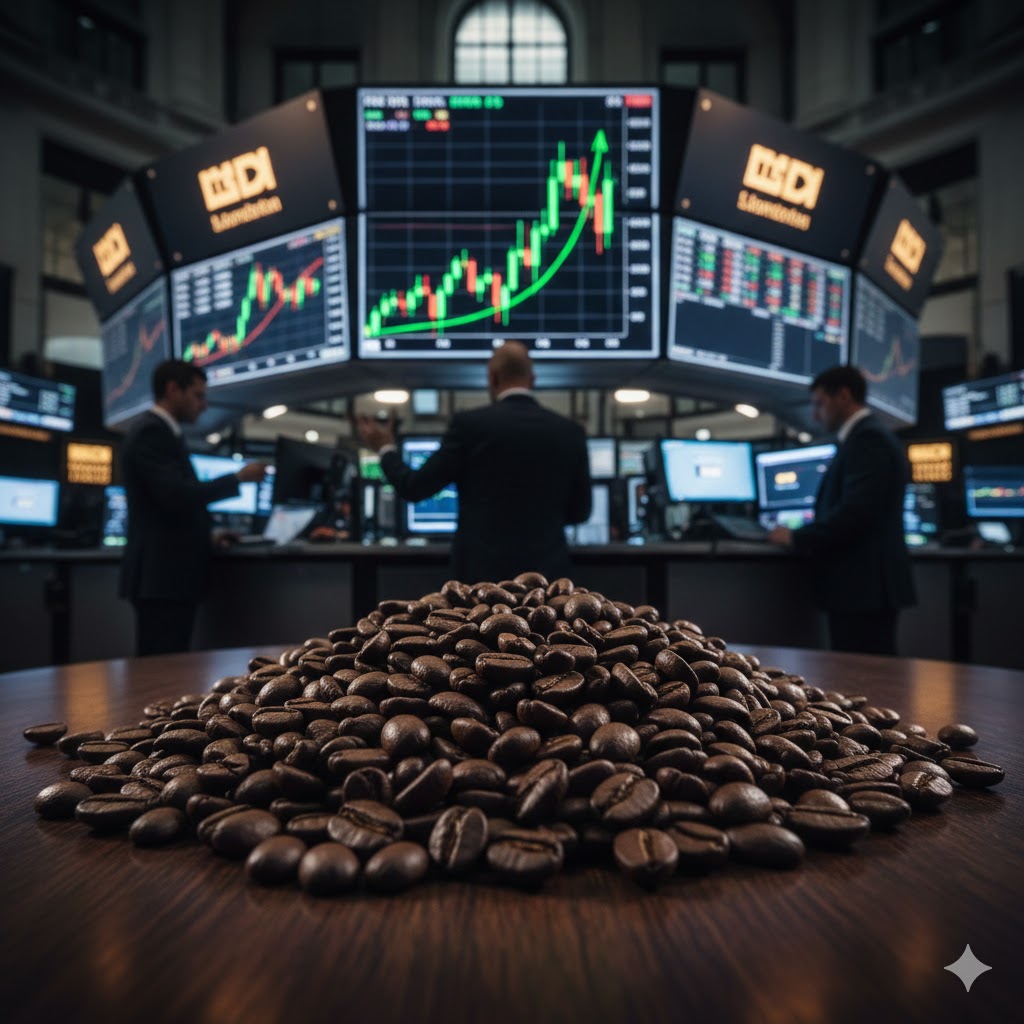
Robusta futures reflect:
- Long-term supply risk
- Climate-adjusted production costs
- A premium for reliability
This explains why pullbacks are shallow and buying interest remains strong.
Arabica Coffee Futures in 2026: Opportunity with High Risk
Volatility, Leverage, and Fast Reversals
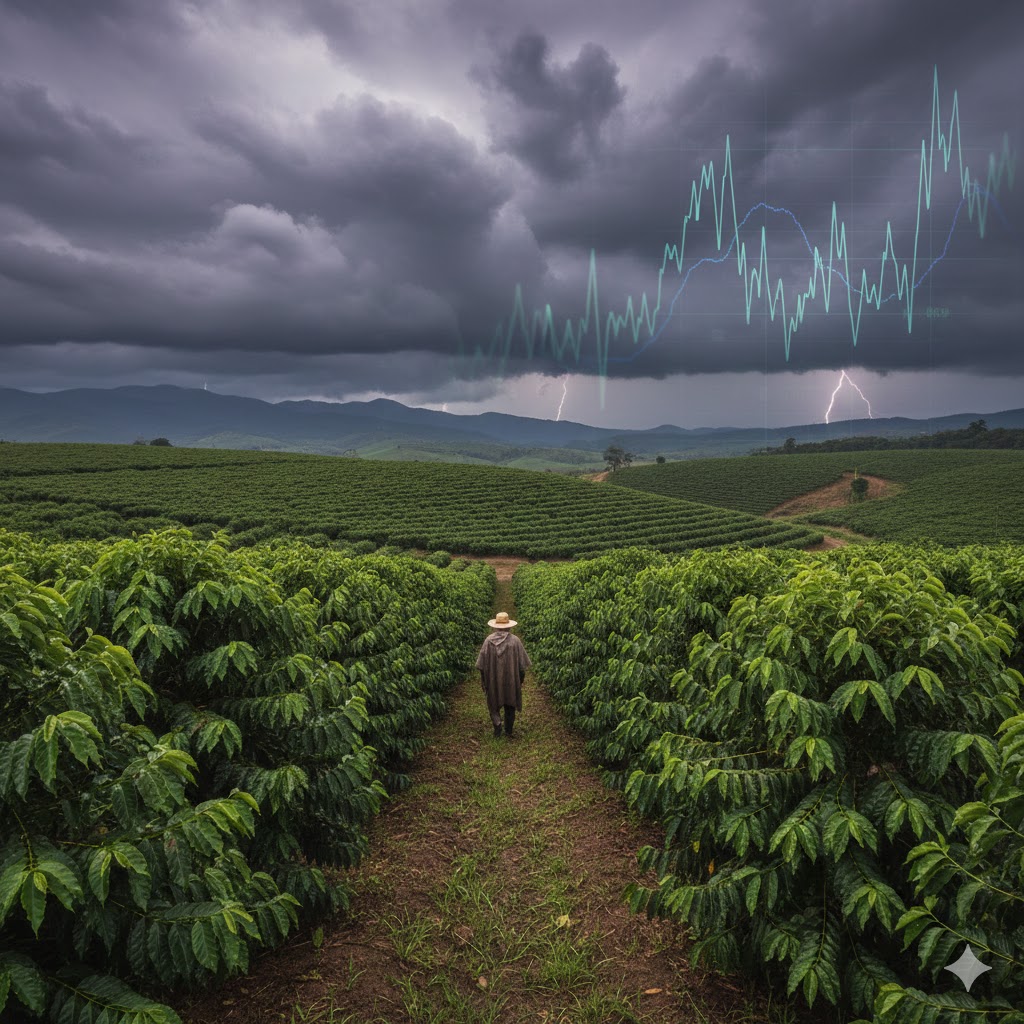
Arabica remains the most volatile coffee contract, offering opportunity but punishing mistakes. Price moves are fast, and reversals are frequent.
Who Should Trade Arabica Futures?
Arabica suits:
- Short-term traders
- News-driven strategies
- Professionals with strict risk controls
It is less suitable for long-term directional positions.
Speculative Capital and Its Impact on Coffee Prices
The Role of Hedge Funds and CTAs
In 2026, large funds:
- Maintain a long bias in Robusta
- Avoid aggressive shorting
- Accumulate positions during pullbacks
This changes market behavior structurally.

Why Price Dips Attract Buyers
Tight physical supply, early hedging demand, and fund accumulation align to create price floors rather than collapses.
Key Risks in Coffee Derivatives Trading for 2026
Supply Chain and Inventory Risks
- Extreme weather events
- Export policy changes
- Exchange inventory adjustments
Financial and Macroeconomic Risks
- Interest rate volatility
- Currency instability
- Global risk-off sentiment

Conclusion: Coffee as a Financial Asset in 2026
The coffee derivatives market in 2026 rewards:
- Preparation
- Discipline
- Structural understanding
It punishes guesswork and nostalgia. Coffee may still be grown on farms—but in 2026, it trades like a strategic financial asset.