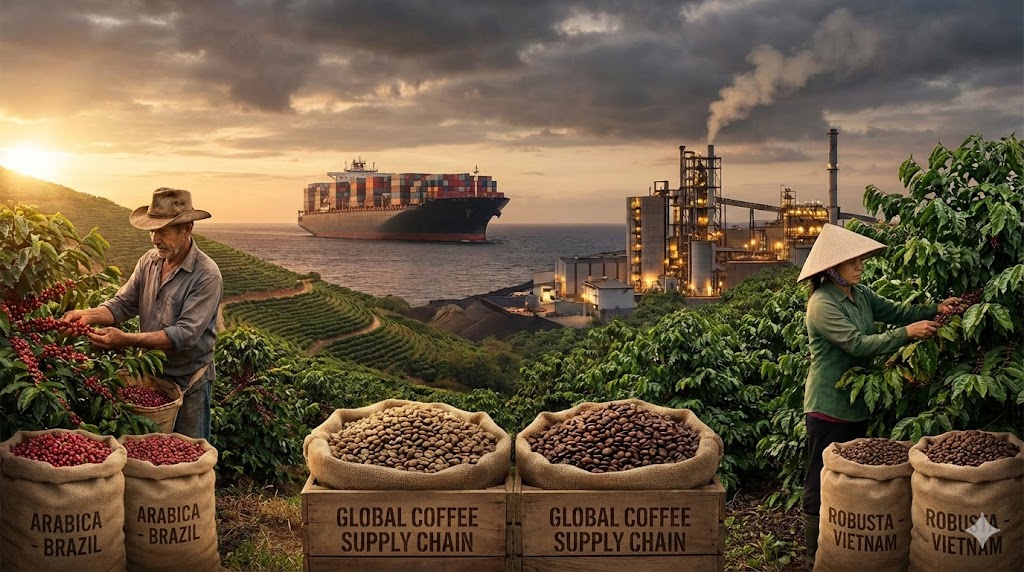
The global coffee industry is entering a decisive phase, shaped by tightening supply, volatile weather patterns, shifting consumption trends, and profound structural changes across producing and consuming regions. As prices remain elevated into 2026, market participants—from farmers and exporters to roasters and investors—are recalibrating strategies in what many describe as a new pricing and risk environment for coffee.
Supply Under Pressure: Climate Risks and Structural Constraints
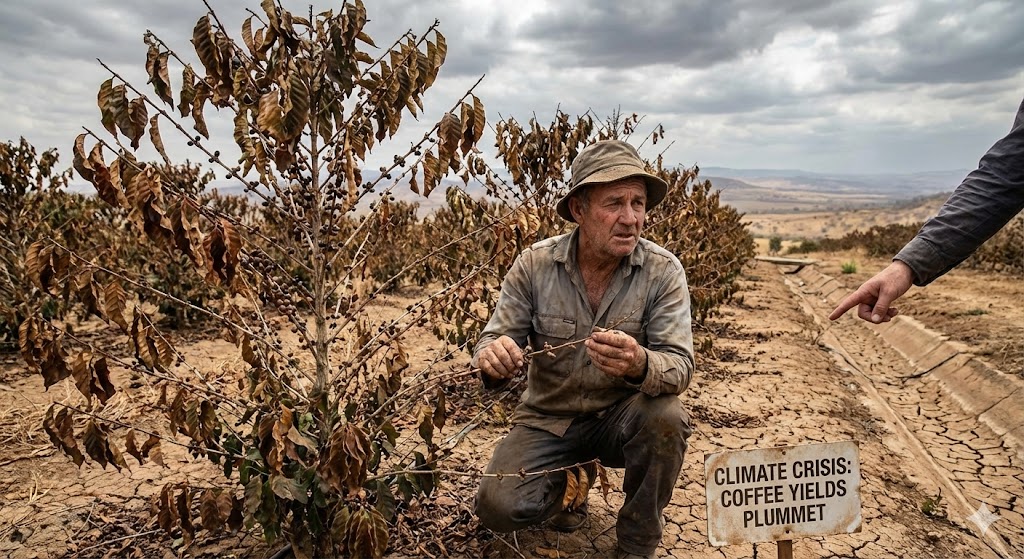
Coffee supply continues to face mounting challenges. Key producing origins such as Brazil, Vietnam, Colombia, and parts of Central America are grappling with the long-term effects of climate volatility. Irregular rainfall, prolonged droughts, and rising temperatures have disrupted flowering cycles and reduced yield potential, particularly for Arabica.
Brazil, the world’s largest coffee producer, has seen output constrained by successive weather events that weakened tree productivity. While some recovery is expected in upcoming harvests, industry analysts warn that structural yield losses may persist due to soil stress and aging plantations.
Vietnam, the world’s top Robusta exporter, faces a different set of pressures. Limited replanting, competition from higher-value crops, and water shortages in the Central Highlands have capped production growth. With global demand for Robusta surging—driven by price-sensitive consumers and reformulation by roasters—Vietnam’s supply tightness has become a central pillar supporting global prices.
In Africa, production growth remains uneven. While countries such as Uganda and Ethiopia continue to expand export volumes, infrastructure bottlenecks, financing constraints, and political risks limit their ability to offset deficits elsewhere.
Demand Dynamics: Resilient Consumption Despite High Prices

Despite elevated prices, global coffee demand has shown notable resilience. In mature markets such as the United States and Europe, consumption growth is modest but stable, supported by at-home brewing and premiumization trends. Consumers may adjust formats or blends, but coffee remains a daily staple with relatively inelastic demand.
Emerging markets, particularly in Asia and the Middle East, continue to drive incremental growth. Rising urbanization, café culture expansion, and younger demographics are reshaping demand patterns. Ready-to-drink (RTD) coffee, specialty beverages, and cold brew formats are gaining traction, especially among Gen Z consumers.
However, industry insiders note early signs of demand rationing at extreme price levels. Roasters are increasingly reformulating blends, substituting Arabica with higher proportions of Robusta, and optimizing grind sizes and extraction efficiency to manage costs.
Price Volatility and the New Market Regime
Coffee prices have entered what traders describe as a structurally higher and more volatile regime. Futures markets for both Arabica and Robusta have experienced sharp swings, driven by weather forecasts, currency movements, and speculative positioning.
The traditional assumption of rapid supply response to high prices is proving less reliable. Replanting cycles are long, capital costs are rising, and climate risk discourages aggressive expansion. As a result, price corrections tend to be shallower and shorter-lived.
Hedging strategies are also evolving. Roasters and importers are extending coverage horizons, while producers increasingly seek price floors through forward contracts and sustainability-linked financing mechanisms.
Sustainability, Regulation and Traceability
Sustainability has moved from a branding narrative to a regulatory and operational imperative. The European Union’s deforestation-free regulation (EUDR) is reshaping supply chains, requiring detailed traceability and geolocation data for coffee imports.
While large exporters and multinational traders are investing heavily in compliance systems, smaller producers face higher costs and operational complexity. This regulatory shift is expected to accelerate consolidation in origin countries, favoring organized cooperatives and vertically integrated supply chains.
At the same time, carbon accounting, regenerative agriculture, and living income benchmarks are gaining prominence in procurement strategies. Buyers are increasingly linking long-term contracts to environmental and social performance metrics.

Industry Outlook: Adaptation Over Expansion
Looking ahead, the coffee industry’s growth narrative is less about volume expansion and more about adaptation. Productivity gains, climate-resilient farming practices, and value-added processing are becoming critical levers for sustainability and profitability.
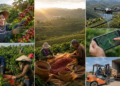
Technology adoption—from precision irrigation and AI-driven crop monitoring to blockchain-based traceability—is accelerating across the value chain. Meanwhile, specialty and differentiated coffees continue to command premiums, offering a partial buffer against cost inflation.
For investors and industry stakeholders, coffee is no longer a simple agricultural commodity but a complex, climate-sensitive asset class with deep geopolitical and regulatory linkages. Navigating this landscape requires not only market insight but also long-term strategic alignment across the supply chain.