Vietnam coffee exports are expected to grow by around 8–10% in 2026 as improving supply and stable demand from major markets support shipment volumes. However, rising global coffee supply could put pressure on export prices and limit the growth of export value, according to Vietnam’s Ministry of Industry and Trade.
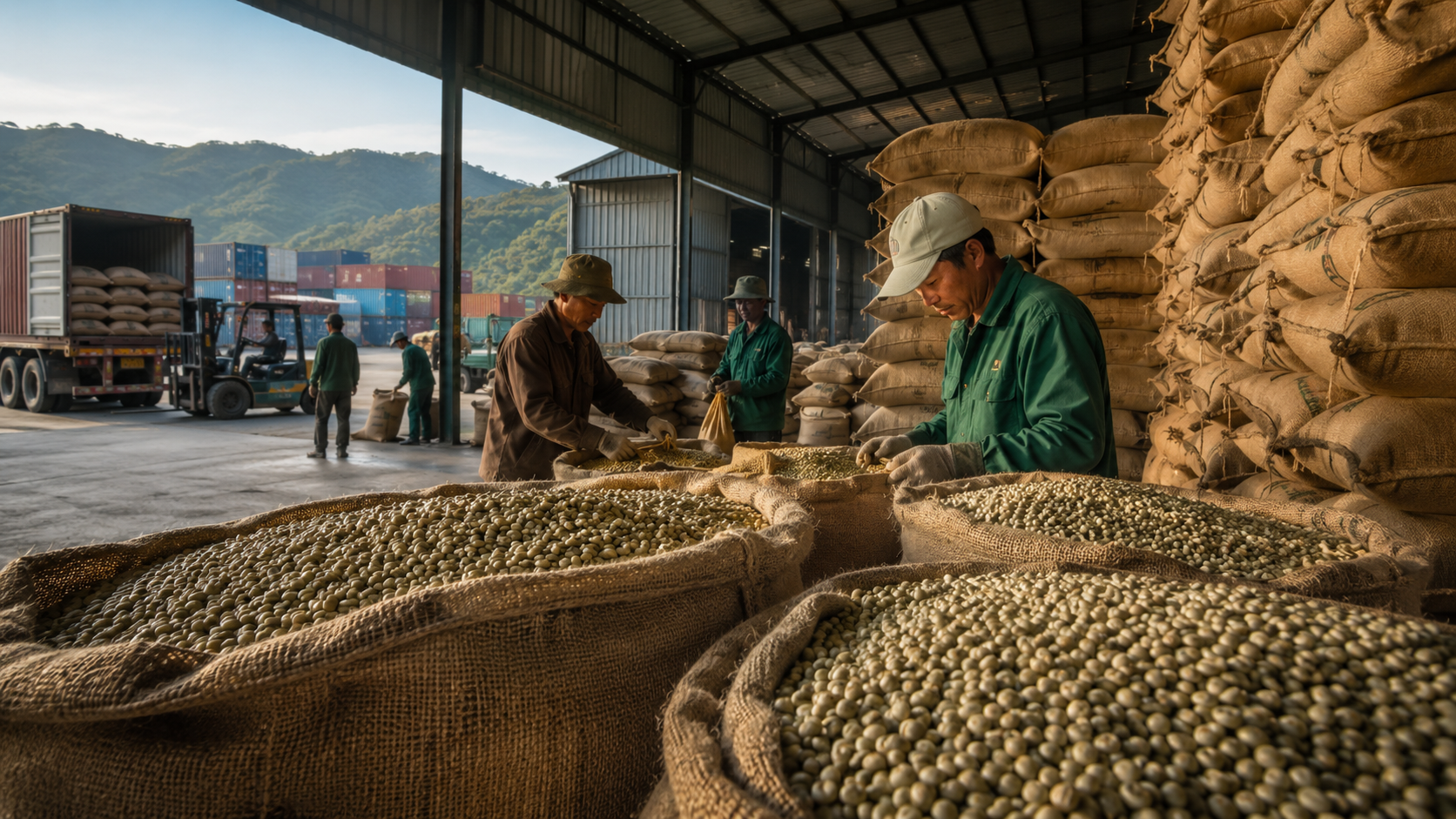
Vietnam’s coffee sector is heading into the final months of the year with a relatively positive export outlook. The Ministry’s Import-Export Department expects the country’s total coffee export volume to increase by 8-10% compared with 2025, supported by improved domestic availability and continued demand from key international markets.
The outlook, however, highlights an important shift in Vietnam’s coffee trade: higher export volumes may not automatically translate into higher export revenue. With global supply recovering, coffee prices are facing renewed downward pressure, making product quality, processing and traceability increasingly important for Vietnamese exporters.
Vietnam Coffee Exports Gain Momentum in July
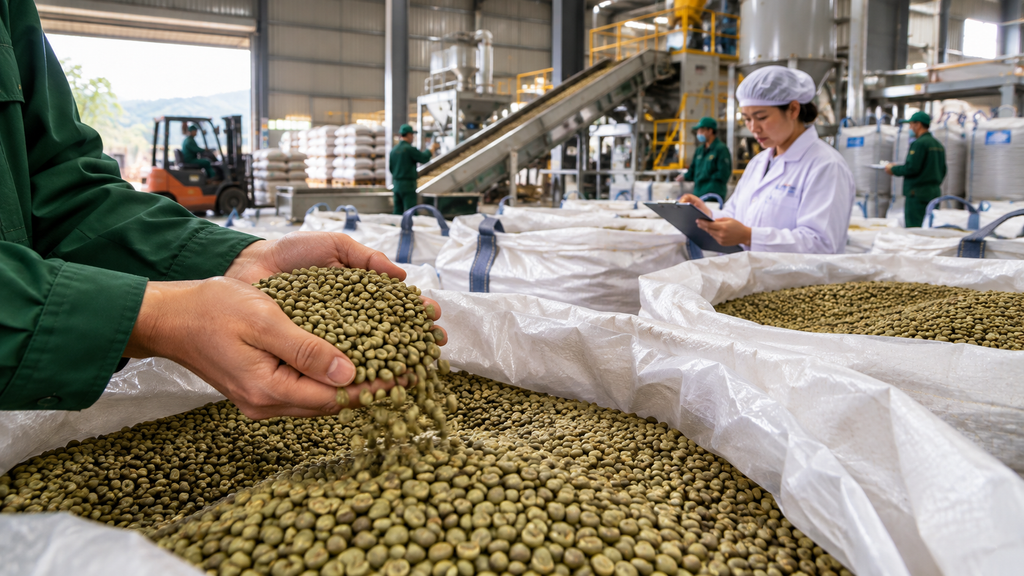
According to data from Vietnam Customs, the country exported approximately 147,900 tonnes of coffee in July 2026, generating an estimated $642.5 million in export value.
Compared with June, July shipments increased by 17%, while export value rose 9.7%. On a year-on-year basis, export volume jumped 44.4%, while export value increased 15%.
For the first seven months of 2026, Vietnam exported approximately 1.2 million tonnes of coffee worth $5.45 billion.
The figures reveal a notable divergence between volume and value. Coffee export volume increased 10.4% year on year, while export value declined 11.2%.
This gap is largely explained by weaker average export prices compared with the same period last year.
Vietnam’s average coffee export price stood at around $4,345 per tonne in July, down 6.2% from June and 20.4% from July 2025. For the first seven months of the year, the average export price was approximately $4,552 per tonne, representing a 19.6% decline from the same period in 2025.
For exporters and producers, this is becoming one of the key issues to watch during the second half of 2026.
EU and US Remain Key Markets for Vietnamese Coffee
The European Union and the United States continue to be two of the most important destinations for Vietnam coffee exports.
During the first seven months of 2026, Vietnam exported approximately 518,200 tonnes of coffee to the EU, generating $2.21 billion in export revenue. The EU accounted for around 40.6% of Vietnam’s total coffee export value.
Export volume to the EU increased 15.8% year on year, although export value declined 11.2%, again reflecting the impact of lower average coffee prices. Germany, Italy and Spain recorded positive demand trends during the period.
The US market has also shown strong growth.
Vietnam exported around 84,900 tonnes of coffee to the United States during the first seven months, with a total value of approximately $364.4 million. Compared with the same period in 2025, export volume increased 36.4%, while export value rose 5.9%.
The strong growth in shipment volume indicates that Vietnamese coffee continues to maintain a significant position in major consuming markets, particularly for Robusta-based products.
China Emerges as a Fast-Growing Market
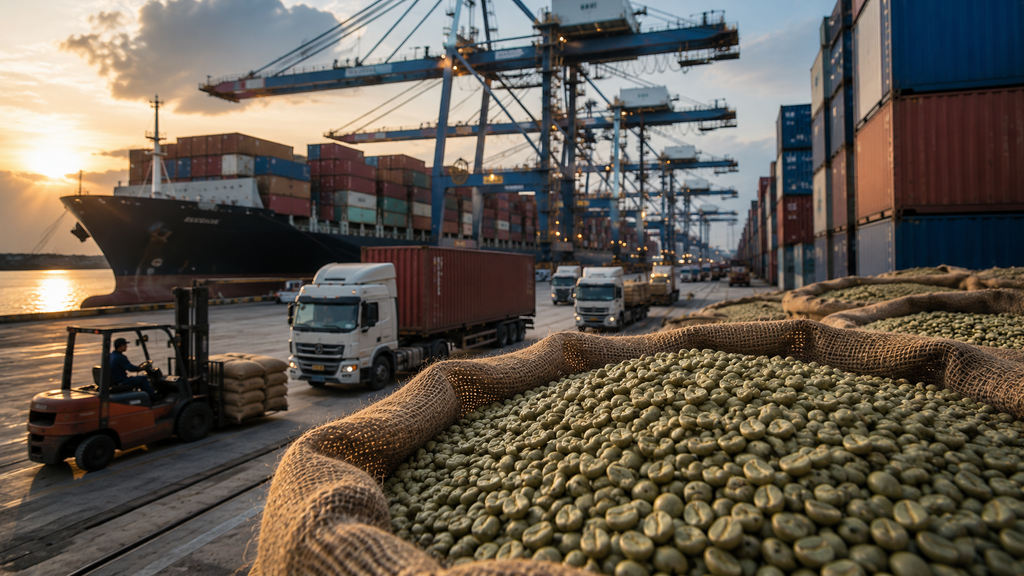
One of the most notable developments in Vietnam’s coffee trade is the rapid expansion of exports to China.
During the first seven months of 2026, Vietnam exported around 44,000 tonnes of coffee to China, generating $251.4 million in export value.
Compared with the same period last year, export volume to China increased 49.4%, while export value surged 72.7%.
The stronger growth in export value compared with volume is particularly significant. It suggests that Vietnam is not only shipping more coffee to China but is also gaining opportunities in higher-value segments of the market.
China’s rapidly developing coffee culture and expanding consumption base could therefore become an increasingly important growth driver for Vietnamese coffee exporters.
For Vietnam, greater penetration into China also offers an opportunity to diversify its export market beyond traditional destinations in Europe and North America.
EUDR and Processed Coffee Could Become More Important
The biggest challenge facing Vietnam coffee exports may not be production capacity but export value.
As global coffee supply improves, international prices could remain under pressure. This means exporters may find it increasingly difficult to generate higher revenue simply by increasing shipment volumes.
The Ministry of Industry and Trade has therefore highlighted EUDR compliance, traceability and deeper coffee processing as important factors for improving the value of Vietnamese coffee exports.
The European Union Deforestation Regulation (EUDR) is particularly relevant because the EU remains Vietnam’s largest coffee export market by value.
For Vietnamese suppliers, meeting traceability and deforestation-free requirements is becoming more than a regulatory obligation. It is increasingly becoming a market-access requirement and a potential competitive advantage.
At the same time, moving toward roasted coffee, soluble coffee, specialty coffee and other processed products could help Vietnamese companies capture more value from each tonne exported.
Vietnam Coffee Market Faces a Volume-Value Challenge
The latest export data presents a mixed picture for the Vietnam coffee market.
On one hand, stronger supply and resilient international demand are creating favorable conditions for export volumes to grow. A potential 8–10% increase in annual shipments would reinforce Vietnam’s position as one of the world’s leading coffee suppliers.
On the other hand, falling average export prices demonstrate that volume growth alone is not enough to guarantee stronger export earnings.
The first seven months of 2026 provide a clear example: Vietnam exported 10.4% more coffee by volume, yet export value fell 11.2%.
This divergence is likely to remain a central theme for Vietnam’s coffee industry through the remainder of the year.
Outlook: More Coffee, But Greater Pressure on Margins
Vietnam’s coffee export outlook for 2026 remains broadly positive, with shipments potentially increasing by 8–10% as supply conditions improve.
Yet the global market is entering a more competitive phase. Higher production in major coffee-producing countries could keep international prices under pressure, creating challenges for farmers, traders and exporters.
The next stage of growth for Vietnam’s coffee industry may therefore depend less on simply exporting more green coffee and more on selling higher-value coffee.
Greater investment in processing, stronger traceability systems, EUDR compliance and market diversification could help Vietnamese exporters protect margins while strengthening their position in international coffee markets.
With demand continuing to expand in markets such as the United States and China, and Europe remaining a critical destination, Vietnam still has significant room to grow.
The key question for the industry is no longer simply how much coffee Vietnam can export, but how much value it can capture from every tonne shipped to the global market.