
Investment Summary
The global coffee market is entering a cyclical inflection point in 2026, transitioning from a deficit-driven rally to a more balanced — and potentially surplus — supply environment. For investors, this shift reduces upside risk from structural shortages but introduces greater differentiation across arabica and robusta, as well as across producers, exporters and downstream operators.
While headline prices are expected to ease, volatility remains structurally embedded, driven by climate risk, inventory sensitivity and regulatory constraints.
Supply Cycle and Price Outlook
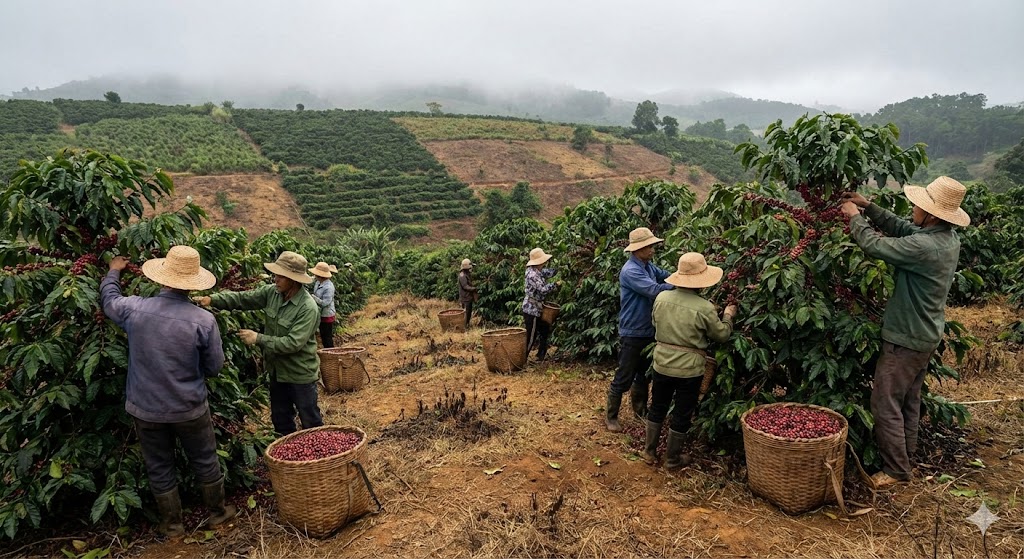
Global production in the 2025/26 season is forecast at 178–179 million bags, with output growth concentrated in robusta-heavy origins.
Price implications:
- Arabica: Higher downside risk as Brazilian supply stabilises and speculative length unwinds. Price performance is likely to track weather volatility rather than structural scarcity.
- Robusta: Structural support remains intact due to strong industrial demand, limited substitution flexibility and Vietnam’s growing — but still weather-sensitive — production base.
From an investment perspective, the arabica–robusta spread is expected to remain elevated relative to long-term averages but narrower than 2024–2025 extremes.
Demand Elasticity and Margin Dynamics
Consumption growth remains positive but price-sensitive, particularly in developed markets where inflation has eroded discretionary spending.
Key margin dynamics:
- Roasters and branded players benefit from lower green coffee input costs in 2026, improving EBITDA visibility.
- Exporters and traders face tighter gross margins, increasing the importance of hedging efficiency and logistics optimisation.
- Specialty and certified segments continue to deliver pricing power, insulating premium-focused operators from broader price declines.
Inventories, Term Structure and Volatility

Rebuilding inventories are expected to flatten the forward curve:
- Backwardation observed during supply shortages is likely to ease.
- Forward curves may shift toward contango, reducing roll yields for passive long positions.
However, coffee remains highly sensitive to weather-driven supply shocks, meaning volatility risk premiums are unlikely to compress materially.
Sustainability Regulation as a Cost and Value Driver
Regulatory frameworks — particularly EU deforestation and traceability rules — are reshaping capital allocation:
- Near term: Higher compliance costs pressure smaller producers and exporters.
- Medium term: Operators with certified, traceable supply chains gain relative valuation premiums.
For investors, sustainability compliance increasingly functions as both a risk filter and alpha screen.

Vietnam and Southeast Asia: Strategic Supply Leverage
Vietnam’s projected 7–10% output growth reinforces its influence over global robusta pricing. However, rising domestic costs and climate exposure suggest supply elasticity remains limited.
This creates:
- Support for robusta-linked instruments
- Strategic value in assets tied to processing, storage and logistics, rather than farm-gate exposure alone

Investment Strategy Considerations
Short-term (6–12 months):
- Tactical trading opportunities driven by weather volatility and inventory data
- Relative-value strategies focusing on arabica vs robusta spreads
Medium-term (12–36 months):
- Selective exposure to downstream players benefiting from cost normalisation
- Structural investment in sustainability-enabled supply chains
Key Risks to Monitor
- Extreme weather events in Brazil or Vietnam
- Regulatory implementation risks and compliance delays
- Macroeconomic shocks impacting discretionary consumption
- Currency volatility in major producing countries
Conclusion
The coffee market in 2026 offers less directional upside but greater strategic complexity. For financial investors, returns are increasingly driven by relative value, volatility management and structural positioning, rather than outright price appreciation.
In this environment, coffee should be approached not as a pure beta trade, but as a selective, risk-managed commodity allocation.