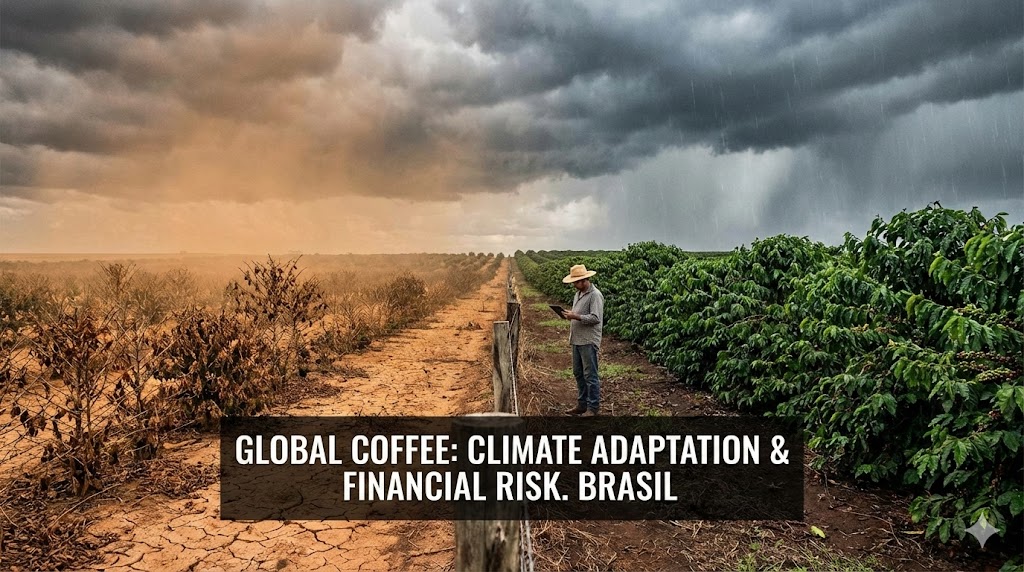
In a move that could have far-reaching implications for coffee production and long-term supply stability, the global coffee sector today welcomed a new science-driven data platform designed to inform climate-resilient replanting decisions. Launched by the non-profit World Coffee Research (WCR) in partnership with the Alliance of Bioversity International and the International Center for Tropical Agriculture (CIAT), the CafeClima platform integrates extensive variety performance data with advanced climate modeling to help farmers, corporates and institutional investors adapt in a volatile climate context.
The initiative arrives as global coffee markets navigate persistent price volatility, with arabica and robusta futures reflecting growing concerns over supply risk amid climate uncertainty and crop shocks. Industry analysts say that climate risk is increasingly a factor in export flows and speculative positioning in ICE exchange futures markets — underscoring why data-driven adaptation strategies are now at the forefront of sector dialogue.
Urgent Need for Climate-Informed Decision Making
Coffee trees are perennial assets with a long lifecycle, making replanting decisions inherently high-stakes for growers and supply chains alike. According to WCR, billions of trees planted decades ago have aged past their most productive years, while accelerating climate volatility could reduce land suitable for coffee production by up to 50% by 2050 if no adaptation occurs.
“Inaction in the face of climate change isn’t an option,” said Dr. Jennifer “Vern” Long, CEO of WCR, in a statement accompanying the platform’s launch. “But acting without insight — planting varieties that won’t thrive under future climates — risks not just capital but a decade of productivity.”
This sentiment reflects broader industry fears that without precision in variety selection, supply chain resilience will be undermined at a time when physical coffee markets already face pressure from weather anomalies linked to El Niño/La Niña cycles, disease incidence, and shifting regional climate patterns. With robusta increasingly relied upon for its resilience under stress, and arabica prized for its premium quality under tightening supply conditions, the implications for prices and export dynamics are significant.
How CafeClima Works
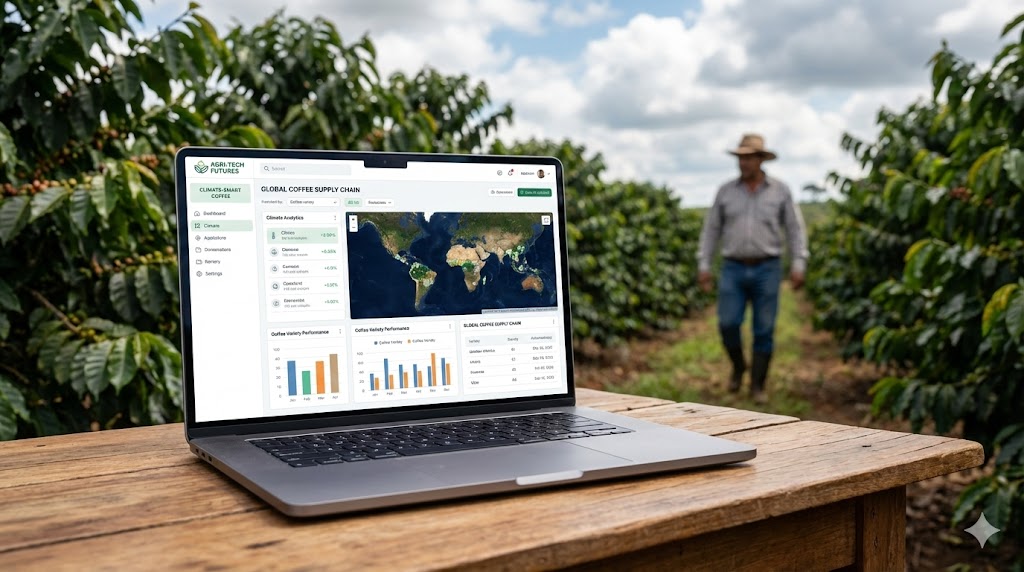
At its core, CafeClima translates complex scientific data into actionable guidance for a range of stakeholders across the coffee value chain. The platform pulls from the International Multi-Location Variety Trial (IMLVT) — a global network of trial sites evaluating coffee variety performance across diverse climates — and pairs this with high-resolution climate projections.
Users can explore which varieties are likely to thrive under future climatic conditions by identifying “climate analogs,” today’s locations that resemble what a given farm’s climate may look like in 2050. This allows agronomists to make evidence-based recommendations, and investors to assess risk more precisely when funding renovation projects.
“CafeClima is a unique decision-support tool,” said Eric Rahn, a researcher affiliated with the Alliance of Bioversity International, highlighting its potential to reduce uncertainty in climate-adapted coffee production.
Addressing a $4 Billion Investment Gap
The platform also responds to a broader funding challenge facing the industry. According to a recent TechnoServe investment case, the coffee sector needs an estimated USD $4 billion over the next seven years to finance regenerative, climate-resilient renovation and replanting at scale.
While governments and supply chain actors have invested roughly $1.2 billion over two decades, efforts have reached only about 5% of the smallholder farmers — the backbone of global coffee production — who urgently need investment to replace outdated tree stocks.
Precision investment in resilient varieties could also yield ancillary benefits, including higher incomes for farmers and a reduction in greenhouse gas emissions, according to the same report. For institutional investors and exporters tracking long-term commodity fundamentals, these insights provide a new lens on the cost of climate adaptation versus the cost of inaction.
Price Implications and Market Dynamics

Although CafeClima does not directly influence short-term price movements on futures markets, its implications for long-term supply fundamentals are clear. As traders and market participants monitor global export data and crop outlooks amid climate-induced volatility, availability of high-quality, resilient coffee stock becomes a critical variable in price risk models.
Analysts note that prolonged climate stress on arabica production has already contributed to wider spreads between arabica and robusta contracts, while speculative funds position around crop risk indicators and weather developments. Price sensitivity to climate variables has made predictive tools like CafeClima increasingly relevant for supply chain hedging strategies and downstream pricing models.
Furthermore, with inflation pressure affecting input costs and logistics, efficient capital allocation into replanting could influence the timing and scale of supply responses — a dynamic closely watched by exporters and commodity index funds alike.
Industry and Institutional Perspectives
The launch of CafeClima has drawn endorsements from a range of actors within the coffee ecosystem. WCR’s 200+ member companies from around the world — including exporters, roasters, and sustainability organizations — contributed funding and support for the platform, signalling widespread industry buy-in for climate-adapted investment.
While some governments and development funders ramp up commitments to climate-smart agriculture, others see CafeClima as a tool to align public and private investment flows more effectively. “Data-led insights are going to be critical if we want to anchor supply chain decisions in long-term viability,” said a senior analyst at a global commodities consultancy (quoted anonymously due to policy).

Outlook: Climate, Supply and Market Resilience
As the coffee sector contends with evolving climate risk and the imperative to sustain supply, tools like CafeClima may shift how the industry evaluates long-range decisions — from farm-level variety selection to multi-continental investment strategies. With climate forecasts indicating continued volatility in key producing regions, and export patterns adjusting accordingly, predictive analytics could become a cornerstone of resilience planning.
Looking ahead, the integration of climate-smart data into commodity risk frameworks may also influence how futures markets price long-term supply risk, potentially affecting spreads, hedging demand, and the allocation of capital towards regenerative agricultural systems. The launch of CafeClima thus marks a substantive step toward transforming climate risk from a reactive challenge into a proactive management priority for the global coffee industry.