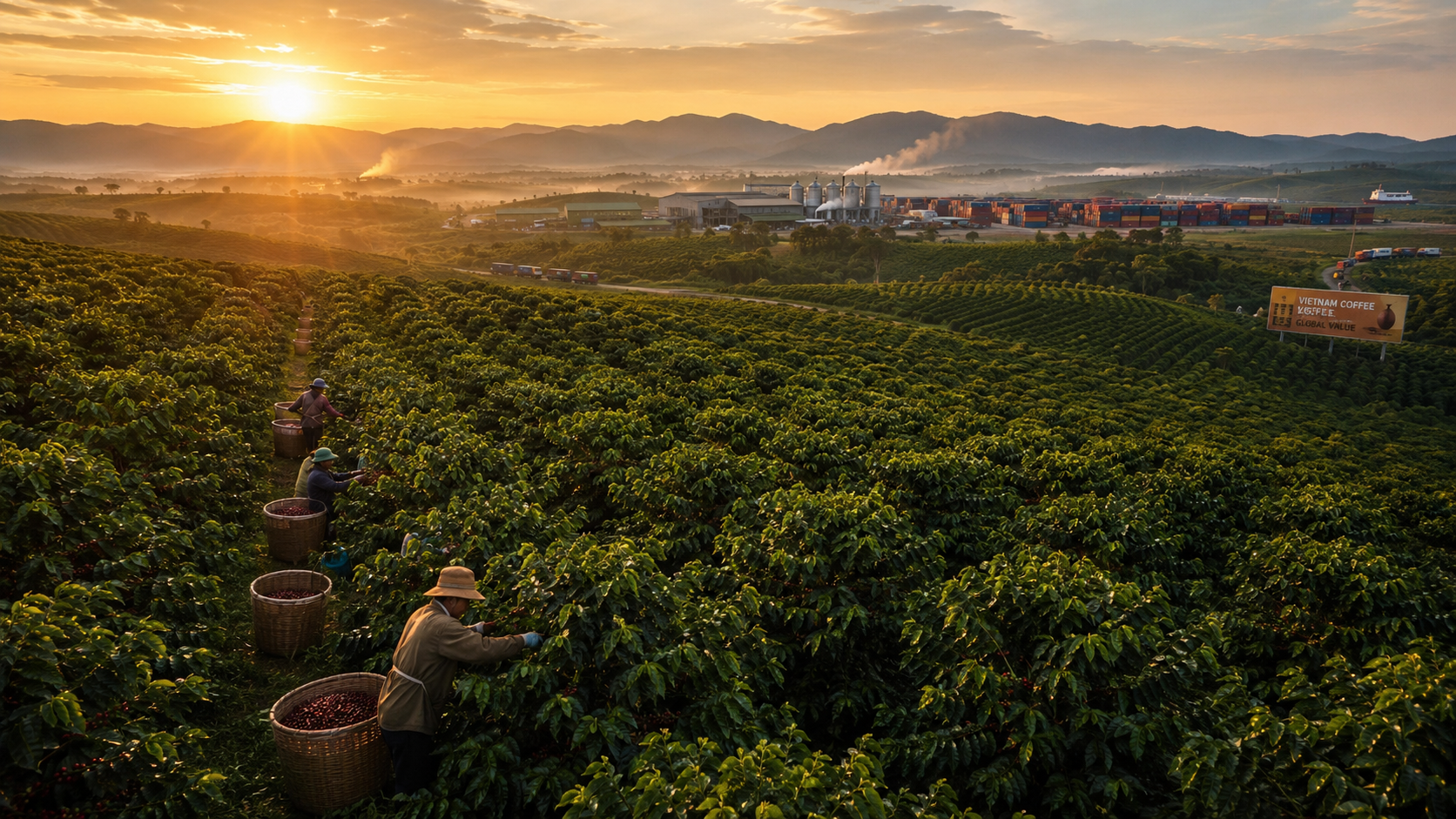
Vietnam’s Coffee Industry Enters a New Era
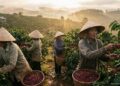
For decades, Vietnam has been recognized as the world’s largest producer and exporter of Robusta coffee. The country’s coffee sector built its global reputation on volume, reliability, and competitive pricing, supplying millions of bags annually to international roasters and manufacturers.
However, the global coffee landscape is changing rapidly.
Consumers, roasters, and major coffee brands are no longer focused solely on supply volume. They increasingly demand traceability, sustainability, quality differentiation, carbon-conscious production, and authentic origin stories. This shift is creating a historic opportunity for Vietnam to move beyond its traditional role as a raw coffee supplier and emerge as a global coffee value center.
The future of Vietnamese coffee will not be measured by export tonnage alone, but by the value created throughout the supply chain.
The End of the Commodity-Only Model
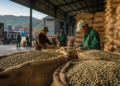
For many years, Vietnam’s coffee exports were heavily concentrated in green coffee beans. While this strategy helped the country become a dominant force in global coffee trade, much of the industry’s economic value remained outside Vietnam.
International traders, multinational roasters, and consumer brands captured the majority of profits through roasting, branding, product innovation, and retail distribution.
Today, market dynamics are changing.
Coffee buyers increasingly seek:
- Specialty and Fine Robusta coffees
- Verified sustainable sourcing
- Traceable supply chains
- Low-emission agricultural practices
- Long-term partnerships with origin countries
As a result, the competitive advantage is shifting from production scale to value creation.
Fine Robusta Is Transforming Vietnam’s Global Position
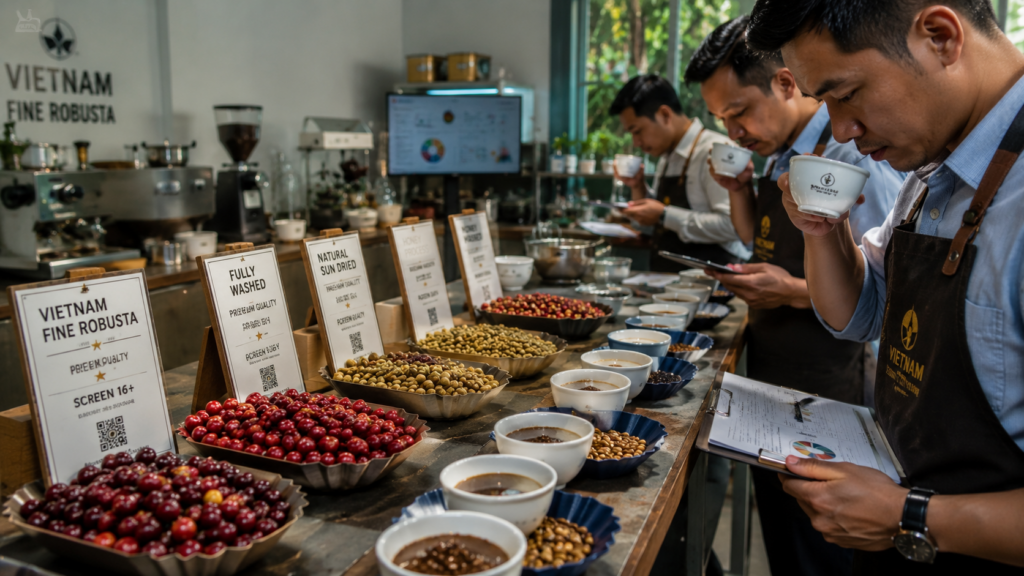
One of the most significant developments in recent years is the rise of Fine Robusta.
Historically, Arabica dominated the premium coffee segment, while Robusta was viewed primarily as an industrial blending ingredient. That perception is rapidly changing.
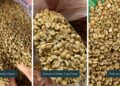
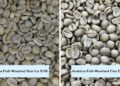
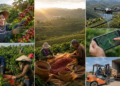
Advances in cultivation, harvesting, fermentation, processing technology, and quality control have enabled Vietnamese producers to create Robusta coffees with complex flavor profiles and specialty-grade characteristics.
Fine Robusta has become one of the strongest strategic assets for Vietnam.
As global coffee demand continues to grow while climate challenges affect Arabica-producing regions, high-quality Robusta is increasingly attracting attention from specialty roasters and international buyers seeking consistency, sustainability, and cost efficiency.
Vietnam is uniquely positioned to lead this emerging category.
Building a Stronger Coffee Value Chain
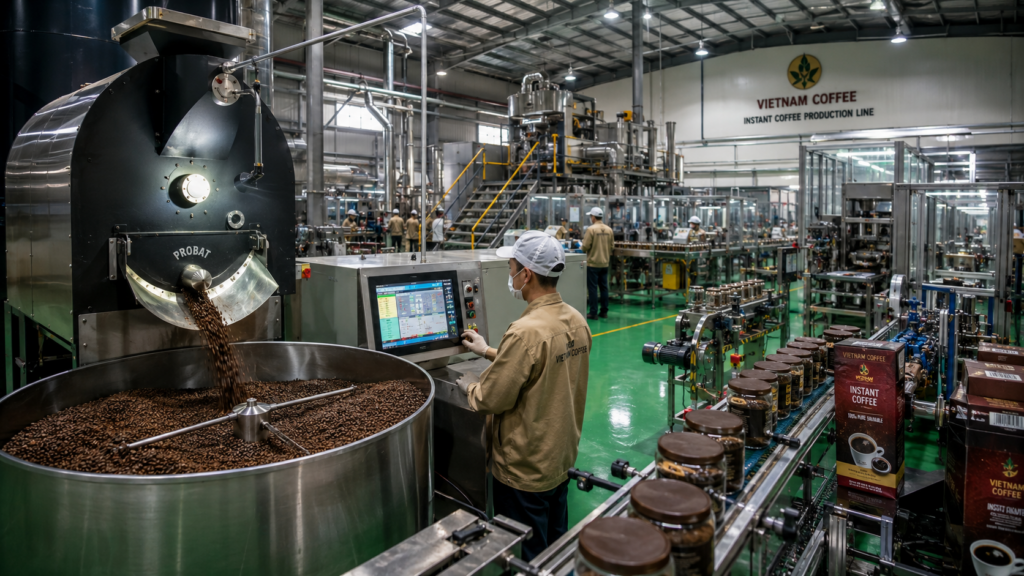
The next phase of growth will depend on how effectively Vietnam develops an integrated coffee value ecosystem.
Key priorities include:
Upgrading Processing Capabilities
Investment in modern wet mills, fermentation technology, drying infrastructure, and advanced quality management systems will improve both consistency and market value.
Expanding Roasted and Soluble Coffee Exports
Rather than exporting only green beans, Vietnam has significant opportunities in:
- Roasted coffee
- Instant coffee
- Coffee concentrates
- Ready-to-drink coffee products
- Private label coffee manufacturing
These segments generate substantially higher margins and strengthen Vietnam’s position in global coffee markets.
Strengthening Origin Branding
Countries that successfully communicate origin identity often achieve stronger market recognition and premium pricing.
Vietnam’s coffee industry can further elevate the reputation of key producing regions such as:
- Dak Lak
- Lam Dong
- Gia Lai
- Kon Tum
Regional storytelling combined with verified quality standards creates long-term brand equity.
Sustainability Is Becoming a Competitive Requirement
Sustainability is no longer optional.
International regulations, particularly in Europe and North America, increasingly require transparency regarding:
- Deforestation-free production
- Carbon footprint reduction
- Water management
- Farmer welfare
- Supply chain traceability
Vietnamese coffee businesses that invest early in sustainable production systems will gain a significant competitive advantage.
At the same time, sustainability initiatives create opportunities to unlock additional value from coffee by-products such as cascara, organic fertilizers, biomass fuel, and circular economy applications.
Why International Buyers Are Watching Vietnam Closely
Global coffee buyers are increasingly recognizing that Vietnam offers more than supply security.
The country now provides:
- Reliable large-scale production
- Expanding Fine Robusta availability
- Competitive manufacturing costs
- Advanced processing infrastructure
- Growing expertise in specialty coffee
- OEM and private label coffee production capabilities
For importers, roasters, retailers, and coffee brands seeking long-term sourcing partners, Vietnam is becoming one of the most strategically important origins in the world.
The Road Ahead: Becoming a Global Coffee Value Center
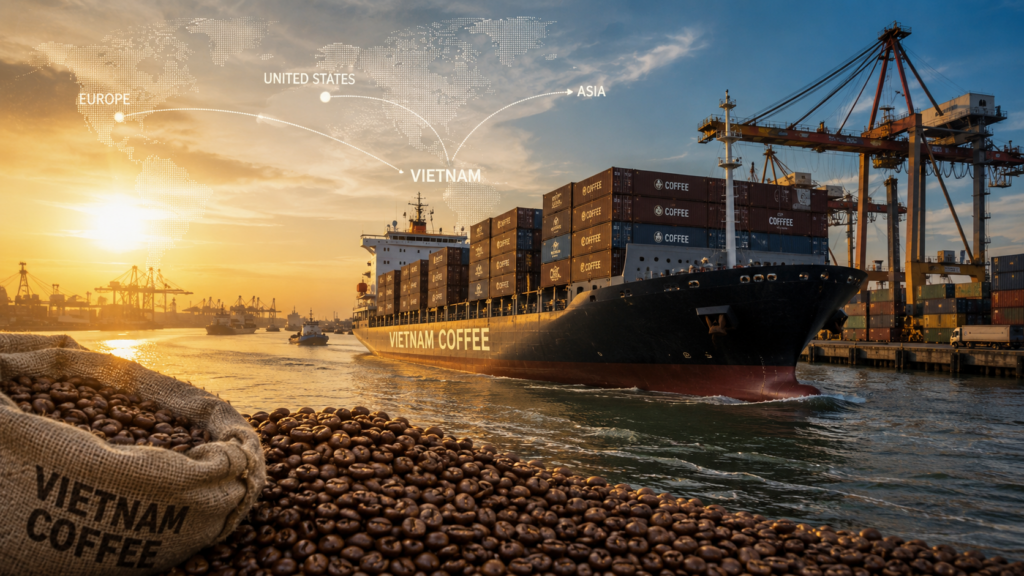
The transformation of Vietnam’s coffee industry is no longer a future ambition—it is already underway.
The industry’s next chapter will be defined by quality, innovation, sustainability, and brand development rather than volume alone.
If Vietnam successfully strengthens its position across cultivation, processing, branding, and consumer-facing products, it can evolve from being the world’s leading Robusta supplier into one of the most influential coffee value hubs globally.
The question is no longer whether Vietnam can produce enough coffee.
The question is how much value Vietnam can create from every coffee bean it produces.