Brazil Set to Deliver a Historic Coffee Crop in 2026
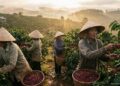
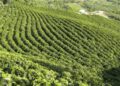
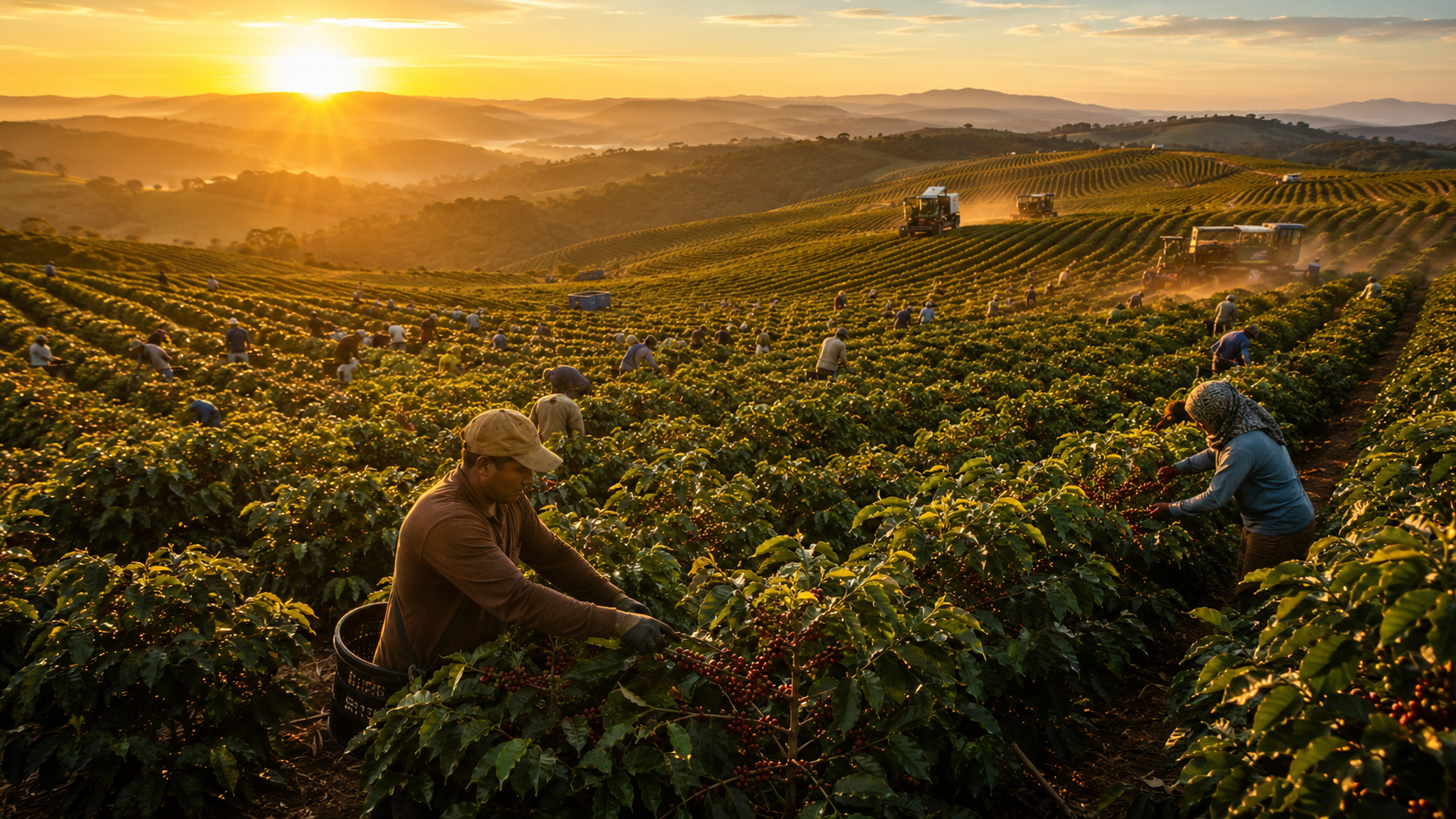
The global coffee market is entering a pivotal phase as Brazil, the world’s largest coffee producer and exporter, moves toward what could become the biggest coffee harvest in its history. Industry forecasts indicate that Brazil’s 2026/27 crop could surpass previous records, supported by favorable weather conditions, expanded cultivation areas, improved farm management, and the positive phase of the country’s biennial production cycle.
Brazil’s national supply agency, Conab, estimates production could reach approximately 66.7 million bags, while several private market analysts project volumes between 71 million and 76 million bags. If realized, the harvest would exceed the previous national record set in 2020 and significantly increase global coffee supply.
For coffee traders, roasters, exporters, and buyers worldwide, the scale of this harvest may reshape market dynamics throughout 2026 and into 2027.
Why Brazil’s Coffee Production Is Surging
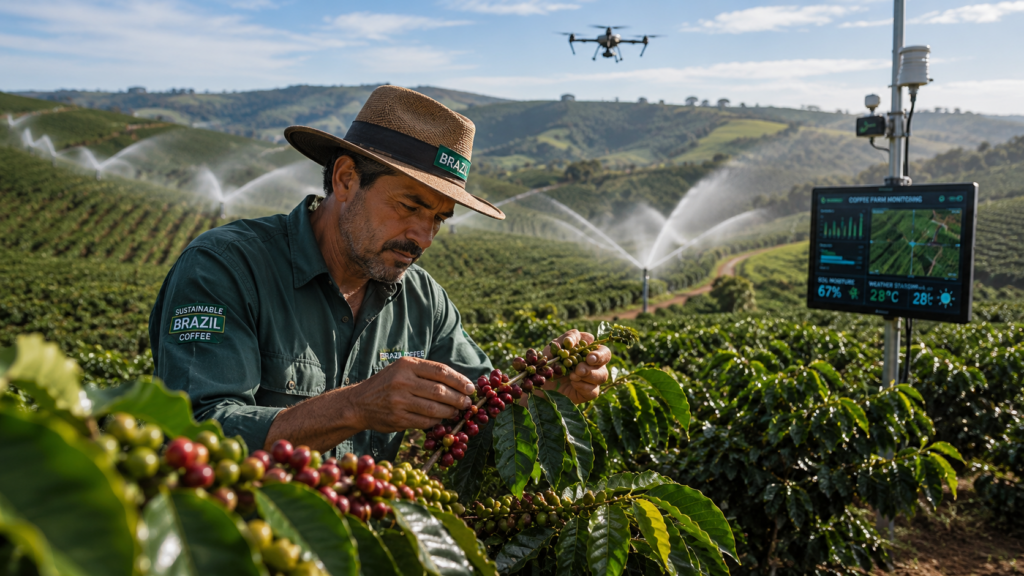
Several factors are converging to create ideal production conditions.
Positive Biennial Cycle Boosts Arabica Output
Coffee trees naturally alternate between lower and higher yielding years. The 2026 season falls within Brazil’s “on-year” cycle, particularly benefiting Arabica production. This biological advantage is expected to drive substantial gains in yield across major producing regions such as Minas Gerais, São Paulo, and Bahia.
Favorable Weather Conditions
Rainfall patterns improved significantly throughout late 2025 and early 2026, helping coffee trees recover from previous stress periods. Better flowering, fruit development, and bean formation have contributed to optimistic production forecasts across much of Brazil’s coffee belt.
Higher Investment from Farmers
Record coffee prices during recent years encouraged growers to invest more heavily in fertilizers, irrigation systems, farm expansion, and modern agricultural technologies. These investments are now translating into stronger productivity levels across many producing regions.
The Rise of Brazilian Robusta Coffee
While Arabica remains Brazil’s flagship coffee, one of the most important developments in the global coffee industry is the rapid expansion of Brazilian Robusta (Conilon) production.
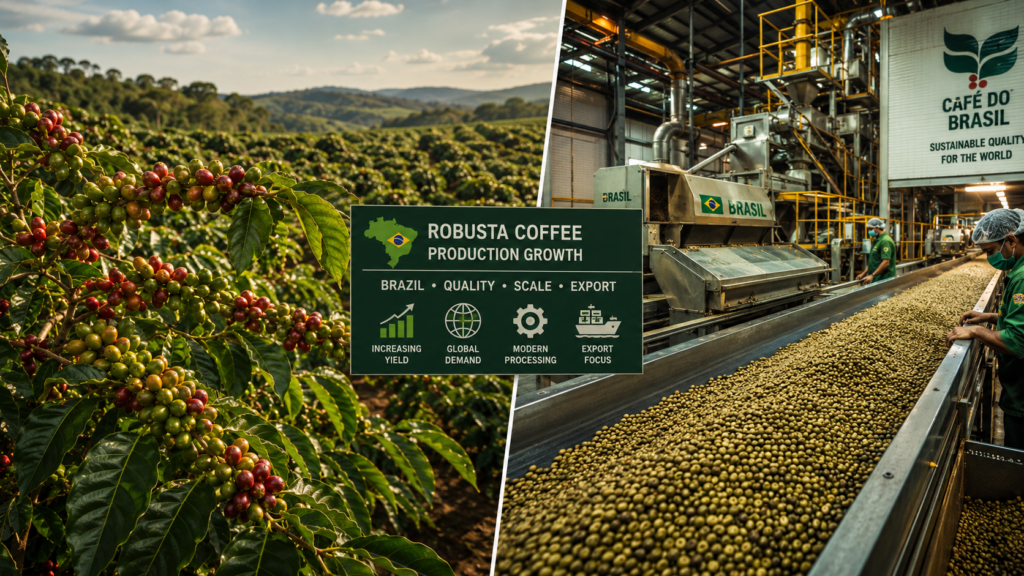
Driven by climate resilience, technological advances, and growing demand from espresso and instant coffee manufacturers, Brazilian Robusta production continues to gain momentum. New growing areas are emerging beyond traditional producing regions, helping Brazil strengthen its position against Vietnam, currently the world’s largest Robusta producer.
Private forecasts suggest Brazil could harvest more than 25 million bags of Robusta coffee during the 2026/27 season, marking one of the strongest crops ever recorded.
This expansion is becoming increasingly important as climate change places greater pressure on traditional Arabica-producing regions around the world. Robusta’s ability to withstand higher temperatures and water stress makes it a strategic crop for the future of global coffee supply.
Will Coffee Prices Fall in 2026?
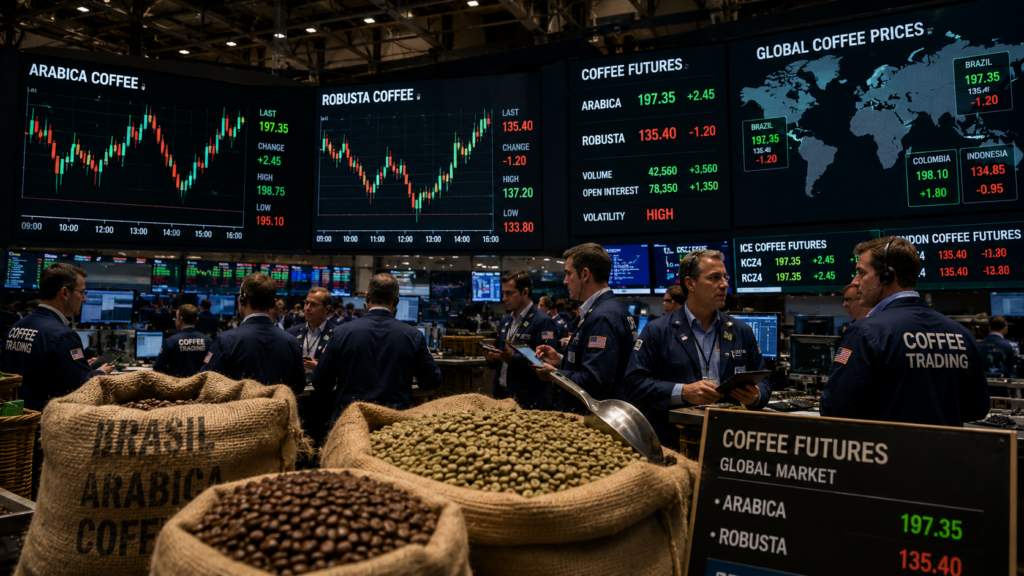
Despite expectations of a record harvest, coffee prices have remained surprisingly resilient.
The reason is simple: supply forecasts do not immediately translate into available coffee on the market.
Many Brazilian producers continue to sell cautiously, while global inventories remain relatively tight compared to historical norms. In addition, shipping costs, logistics challenges, and ongoing uncertainty regarding future weather conditions continue to support market prices.
Several analysts expect increased supply to place downward pressure on Arabica futures during the second half of 2026. However, most forecasts do not anticipate a dramatic price collapse due to strong global demand and persistent structural risks within the supply chain.
As a result, coffee market volatility is likely to remain elevated throughout the year.
Climate Change Remains the Long -Term Risk
Although Brazil’s current crop outlook appears exceptionally strong, climate risk continues to be the biggest long-term challenge facing the coffee industry.
Research suggests that rising temperatures, irregular rainfall patterns, drought events, and extreme weather could reduce the suitability of many Arabica-growing regions by 2050. Major producing countries including Brazil, Colombia, and Honduras may face increasing pressure on yields and quality over the coming decades.
This reality is accelerating investment in climate-resilient coffee varieties, improved irrigation systems, and sustainable farming practices. Brazilian researchers and producers are already expanding efforts to develop more drought-resistant coffee cultivars capable of maintaining productivity under changing environmental conditions.
What This Means for Coffee Buyers and Roasters
For coffee importers, roasters, and private label brands, Brazil’s record crop presents both opportunities and challenges.
On one hand, larger supplies may create improved purchasing opportunities and potentially reduce green coffee costs later in the season. On the other hand, market volatility, currency fluctuations, logistics costs, and climate uncertainty will continue influencing pricing decisions.
Companies that actively monitor Brazil’s harvest progress, ICE inventory movements, and global supply-demand balances will be better positioned to manage procurement risk throughout 2026 and 2027.
Outlook: A New Era for the Global Coffee Market
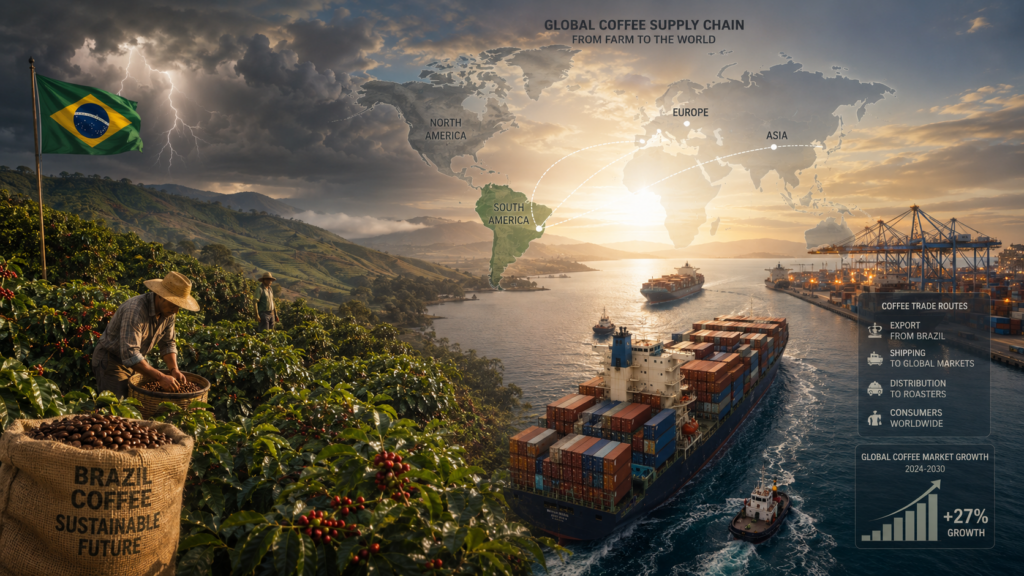
Brazil’s 2026 coffee harvest could become one of the most significant events in recent coffee market history. Record production levels, expanding Robusta cultivation, and evolving climate realities are reshaping the industry’s future.
While increased supply may help ease some of the tightness that has supported coffee prices in recent years, the market remains far from predictable. Weather risks, farmer selling behavior, global demand growth, and sustainability challenges will continue influencing coffee prices long after the harvest reaches export channels.
For coffee businesses, traders, and investors, 2026 is shaping up to be a defining year – one that may determine the next chapter of the global coffee market.