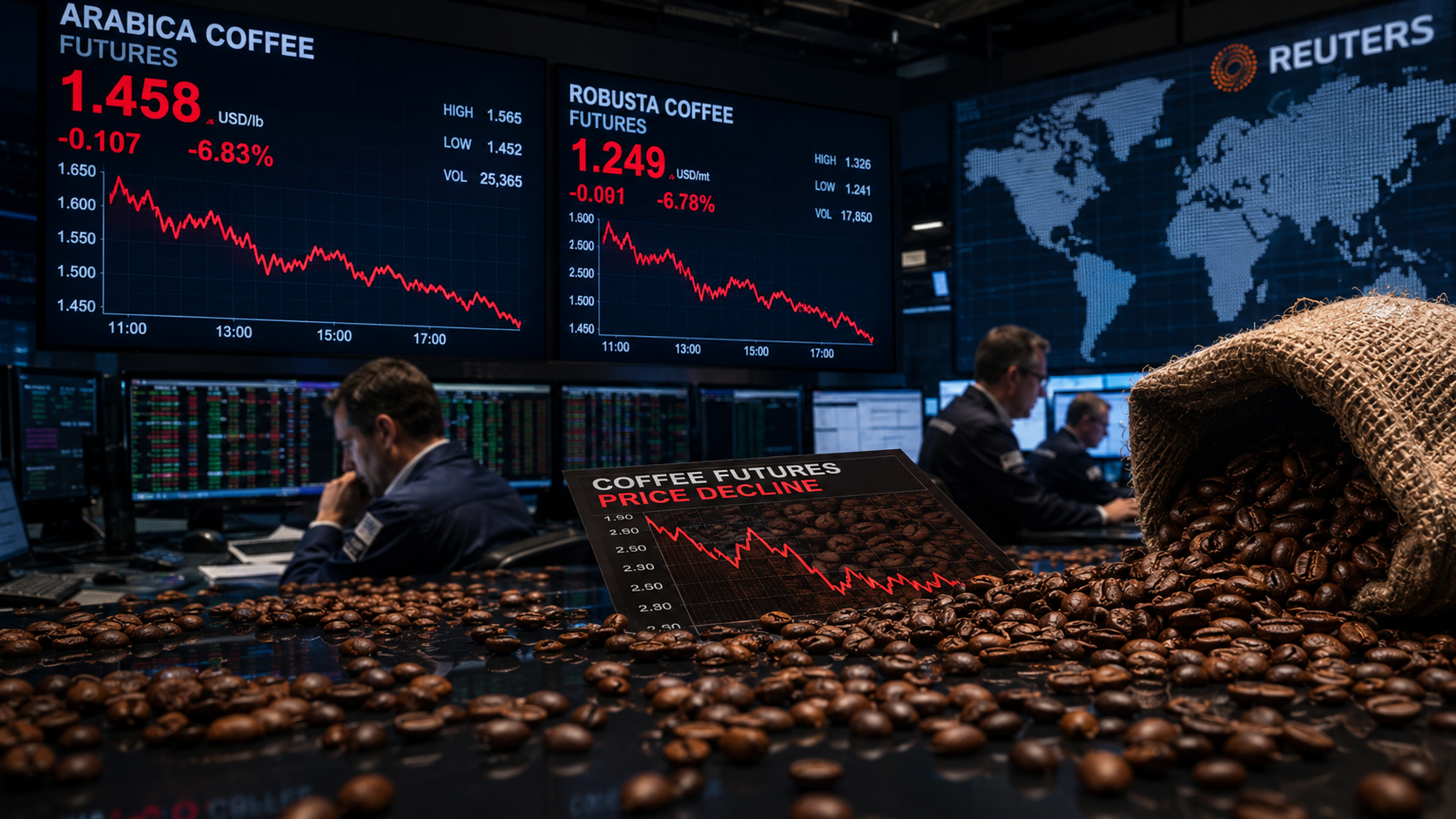
The global coffee market is beginning to lose some of the heat that drove prices to historic highs over the past two years. After months of volatility fueled by supply shortages, climate disruptions, and aggressive speculative buying, traders are now turning their attention to a different story: the arrival of new harvests from Brazil and Vietnam.
Across commodity exchanges, coffee prices have started to soften as fresh supply enters the market and expectations grow for a larger global crop in the 2026/27 season. For exporters and roasters, the shift could bring much-needed stability. For farmers, however, the cooling market raises new concerns about margins after a period of exceptionally profitable prices.
The pressure is coming from both sides of the coffee world at once.
Brazil, the world’s largest producer of Arabica coffee, is moving deeper into harvest season with improving weather conditions supporting crop development. At the same time, Vietnam — the global leader in Robusta production – is expected to maintain strong export flows as inventories slowly recover following previous supply tightness.
Together, the two countries account for more than half of global coffee supply. Any change in production outlook from either origin immediately reshapes market sentiment worldwide.
Coffee Prices Retreat From Recent Peaks
Coffee futures on both the London and New York exchanges have recently moved lower as traders react to increasing supply expectations. Robusta contracts in London, which previously surged to record territory during the supply crisis of 2024 and 2025, have now entered a period of correction.
Arabica prices have also weakened as investors reduce risk positions ahead of Brazil’s peak harvest months.
Market analysts say the decline does not necessarily signal a collapse in demand. Instead, it reflects a market attempting to rebalance after a prolonged period of extreme tightness.
For much of the last two years, coffee prices were driven by fear – fear of drought in Vietnam, fear of frost in Brazil, fear of shipping disruptions, and fear of shrinking inventories at global exchanges. Now, the conversation is gradually shifting toward how much coffee could become available during the second half of 2026.
That psychological change alone has been enough to cool speculative momentum.
Brazil’s Harvest Becomes the Center of Attention
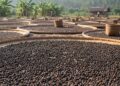
In Brazil, harvesting activity is accelerating across major coffee – producing regions including Minas Gerais, Espírito Santo, and São Paulo. Early reports from industry groups indicate that this year’s crop quality appears relatively healthy despite concerns earlier in the season about uneven rainfall.
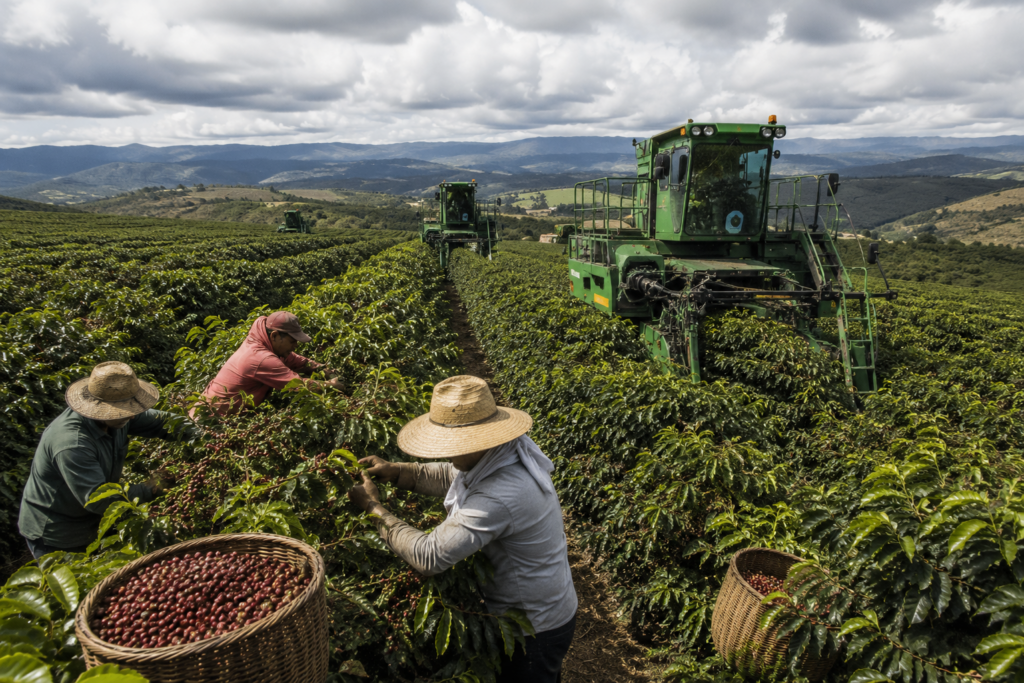
Weather conditions over recent months have generally supported bean development, allowing farmers to enter harvest season with cautious optimism.
The market is watching Brazil closely because production estimates continue to rise. Several analysts now believe the country could deliver one of its strongest harvests in recent years if favorable weather continues through the remainder of the winter period.
Arabica output is expected to lead the recovery, though Conilon Robusta production also remains solid.
As more Brazilian coffee enters export channels, global buyers who spent much of the past year competing aggressively for limited supply are beginning to ease purchasing pressure. This has contributed directly to softer futures prices in both London and New York.
Still, traders remain careful about declaring the supply crisis over.
Brazil’s winter frost season has not yet fully passed, and the market remembers well how quickly weather events can reverse sentiment. A single severe frost event in key growing regions could immediately trigger another wave of volatility.
For now, however, harvest momentum is outweighing weather fears.
Vietnam Faces a Different Challenge
While Brazil focuses on harvesting, Vietnam is dealing with a more complicated market environment.
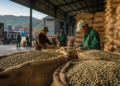
Vietnamese coffee exports remain active, but domestic selling has slowed in several producing regions as farmers continue holding back inventory in hopes of stronger prices later in the year. This behavior has become increasingly common after growers witnessed the extraordinary price rallies of recent seasons.
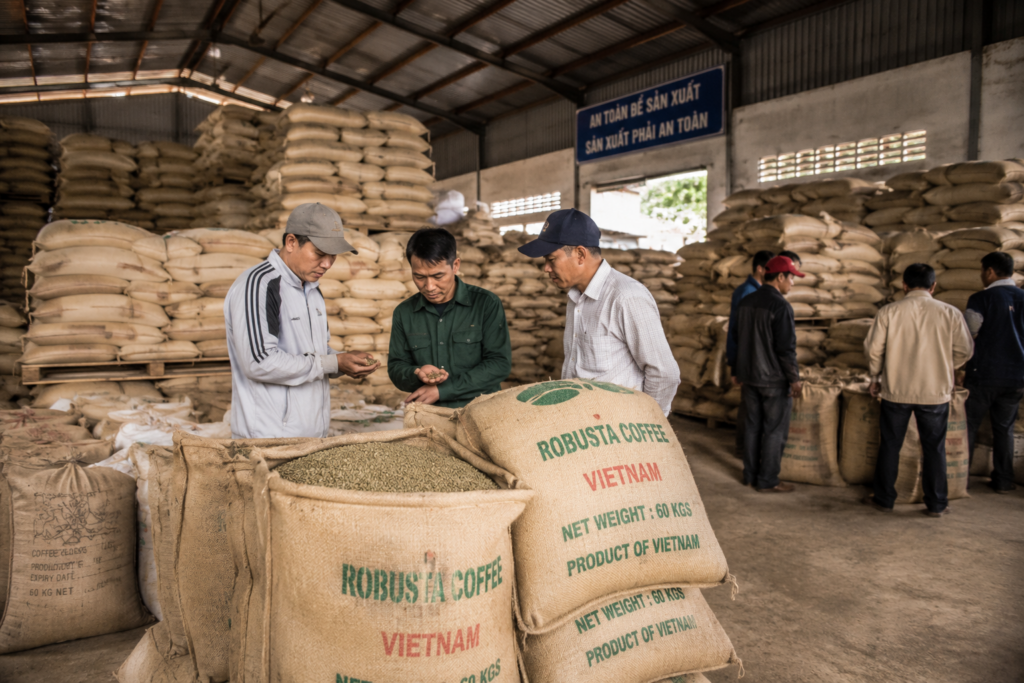
At the same time, exporters are facing softer international pricing compared with the peaks seen in 2025.
The result is a market caught between strong physical demand and weaker speculative sentiment.
In the Central Highlands, weather conditions remain a key concern for the upcoming crop cycle. Some regions have experienced uneven rainfall patterns, creating uncertainty about productivity during the next flowering stage.
Although current forecasts still point toward stable production overall, traders are becoming more sensitive to any climate-related risks after several years of unpredictable weather linked to El Niño conditions.
Vietnam’s position in the global market has become even more important as Robusta demand continues growing worldwide.
Large commercial roasters increasingly rely on Robusta beans for instant coffee production and espresso blends due to cost pressures and changing consumer habits. Vietnamese coffee, with its competitive pricing and improving quality standards, remains central to that supply chain.
Even as prices cool, international demand for Vietnamese Robusta remains relatively firm.
Export Markets Begin Adjusting to Lower Prices
The recent decline in coffee prices is already beginning to influence global trade flows.
Importers who delayed purchases during the peak rally are slowly returning to the market, hoping to secure contracts before another potential supply shock appears. Roasters across Europe, the United States, and Asia are also benefiting from reduced raw material costs compared with earlier this year.
For Vietnam’s export sector, however, lower prices create a more complicated picture.
Export volumes may remain healthy, but total export value could face pressure if the market continues cooling. This is especially important for exporters operating with narrow margins after logistics, financing, and inventory costs increased sharply over recent years.
Many companies are now focusing more heavily on higher-value products such as roasted coffee, soluble coffee, and specialty-grade beans rather than relying entirely on green coffee exports.

The shift reflects a broader transformation happening across the Vietnamese coffee industry.
For years, Vietnam built its global dominance on large-scale Robusta production. Today, the conversation is increasingly about quality, sustainability, traceability, and branding.
That transition may ultimately determine how resilient the industry remains during future price cycles.
Funds and Speculators Reduce Aggressive Buying
Another major factor behind the market slowdown is the behavior of investment funds.

Over the past two years, coffee became one of the most aggressively traded agricultural commodities in the futures market. Hedge funds and speculative investors poured significant capital into coffee contracts as supply fears intensified.
Now, many of those same investors are beginning to reduce bullish positions.
As fresh harvest supply enters the market, speculative traders are taking profits and shifting capital toward other commodities with stronger short-term momentum. This has amplified downward pressure on futures prices, particularly in the Robusta market.
Still, volatility remains extremely high by historical standards.
Coffee continues to trade in a fragile environment where weather events, currency fluctuations, shipping disruptions, and geopolitical risks can quickly alter sentiment.
That means the current cooling phase may not necessarily develop into a long-term bear market.
A Market Searching for Balance
After years of extreme turbulence, the global coffee market appears to be entering a transition period.
Supply conditions are improving, but uncertainty remains everywhere — from Brazil’s winter weather risks to Vietnam’s climate outlook and the future pace of global demand growth.
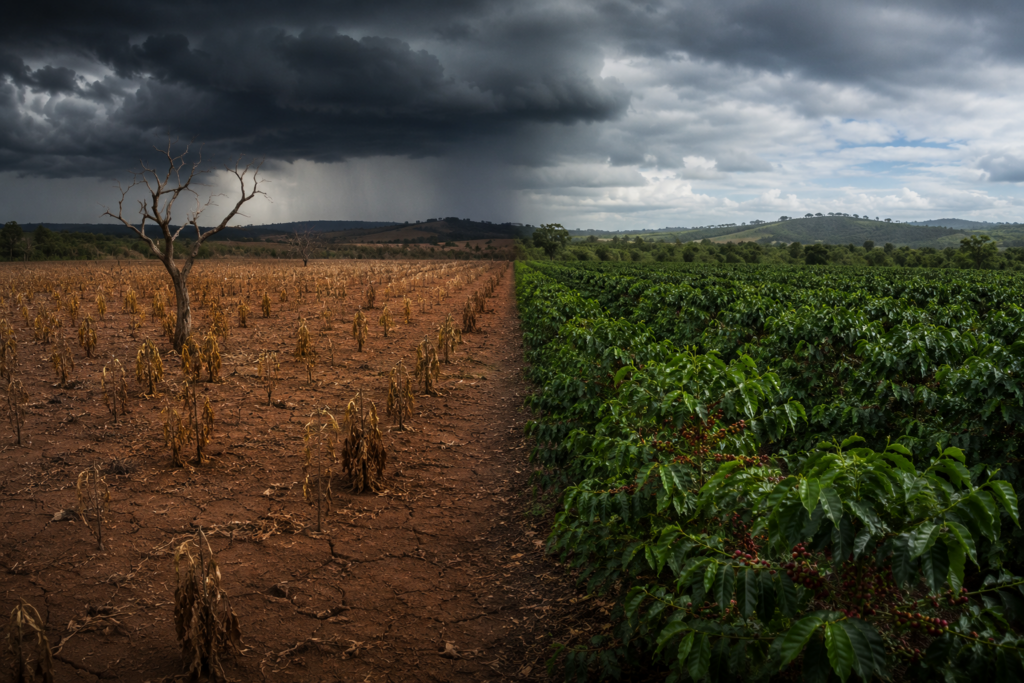
For traders, the market is no longer driven purely by scarcity fears. Instead, attention is shifting toward whether expanding production can finally stabilize inventories after years of deficits.
For farmers, the situation is more emotional.
Many growers benefited from record prices over the past two seasons, but rising production costs have also changed the economics of coffee farming. Fertilizer, labor, transportation, and financing expenses remain elevated in many producing countries.
As prices soften, profit margins could narrow faster than expected.
At the consumer level, however, the market cooldown may eventually ease pressure on retail coffee prices around the world – though the effect will likely take time to fully appear in supermarkets and coffee chains.
For now, the coffee market sits in a delicate middle ground: no longer in panic mode, but still far from completely stable.

The next few months – especially Brazil’s harvest progress and Vietnam’s weather conditions – will likely determine whether the market continues cooling or returns once again to volatility.