
Ethiopia Gains Powerful Access to the World’s Fastest-Growing Coffee Consumption Market
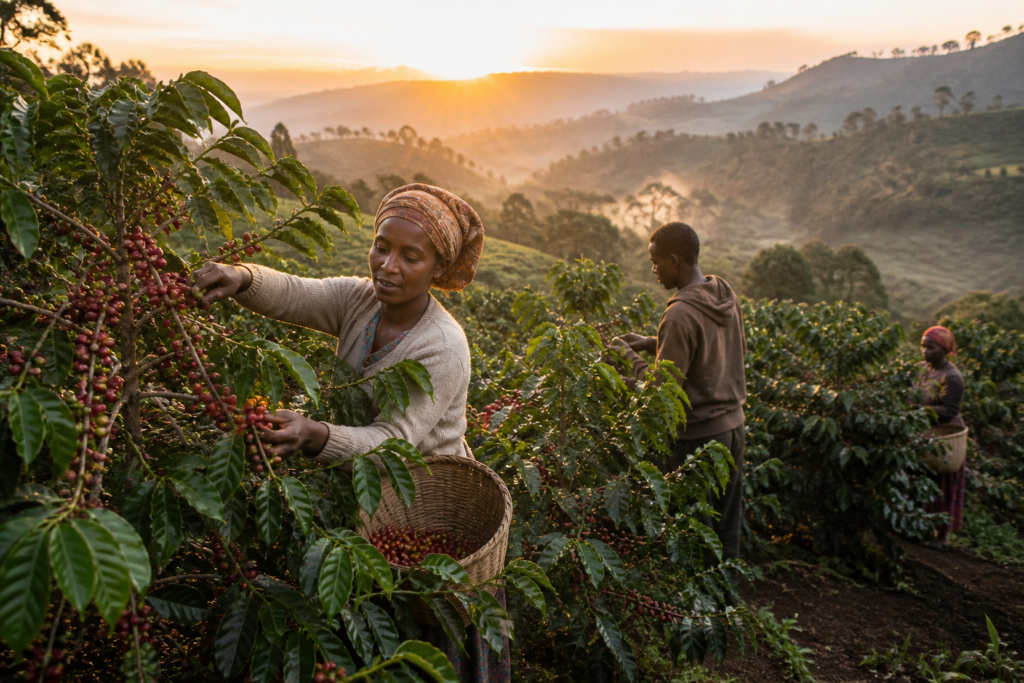
Starting May 1, 2026, China officially implemented a zero-tariff policy on imports from 53 African nations, including Ethiopia – a move that could significantly alter global coffee trade dynamics.
For Ethiopia, widely recognized as the birthplace of Arabica coffee, this policy creates far more than a trade incentive. It offers a substantial competitive advantage in penetrating one of the world’s largest and fastest-expanding consumer coffee markets.
Ethiopian coffee exports to China have already surged dramatically, rising from approximately 4,000 tons in 2018 to over 34,000 tons by 2024. With tariff barriers now removed, Ethiopian exporters can offer more competitive pricing compared to major producers like Brazil and Latin American suppliers that continue to face standard import duties.
Major Implications for Vietnam and the Global Coffee Industry

For Vietnam – the world’s leading robusta producer – China’s tariff elimination signals both opportunity and intensifying competition.
Key challenges include:
- Ethiopian Arabica could rapidly expand market share in China’s premium and specialty coffee segments.
- China is diversifying sourcing strategies, reducing overreliance on Southeast Asian suppliers.
- Chinese roasters and importers may increasingly favor African coffee due to improved cost efficiency.
- Global price competition could intensify amid already volatile supply chains shaped by climate pressures and geopolitical instability.
Vietnam’s strategic strengths remain:
- Vietnamese robusta dominates mass-market soluble coffee and espresso blends.
- Vietnam retains superior processing infrastructure, logistics, and export scalability.
- Expanding value-added products, specialty robusta, and branding could help preserve long-term competitiveness.
Africa’s Emerging Role in Global Coffee Supply Chains
China’s decision reflects a broader geopolitical and economic strategy:
- Expanding trade influence across Africa
- Securing agricultural commodity supply chains
- Reducing dependency on traditional exporters
- Building diversified sourcing resilience amid global disruptions
This policy could accelerate:
- Increased Chinese investment in African coffee infrastructure
- Greater export of roasted and processed coffee from Africa
- Stronger competition with South American and Southeast Asian producers
- Structural shifts in future coffee pricing and supply networks
Coffee Market Outlook

Short-term:
- Arabica prices may gain support as Ethiopian demand rises.
- Robusta remains primarily influenced by Vietnam, Indonesia, and weather-related supply risks.
Medium to long-term:
- Competitive pressure across origins is likely to increase.
- Traditional exporters relying on raw commodity sales may face margin compression.
- Nations focused on upgrading branding, quality, and downstream processing will hold stronger strategic positions.
Strategic Conclusion
China’s removal of tariffs on Ethiopian coffee is not merely a bilateral trade adjustment — it represents a larger transformation in global coffee power structures.
For Vietnam and other major producers, this development underscores a critical industry reality:

Future coffee leadership will depend not only on production volume, but on:
- Brand positioning
- Specialty quality
- Value-added processing
- Market diversification
- Strategic trade alignment
Bottom Line:
The next global coffee cycle will be shaped by those who control premium consumer markets and higher-value supply chains – not simply those who produce the most beans.