For decades, the global coffee industry has revolved around a familiar geographic narrative: the “Bean Belt,” a tropical band stretching between the Tropics of Cancer and Capricorn. Countries like Brazil, Ethiopia, and Panama have long dominated the specialty coffee conversation. But in 2026, a surprising contender is emerging from outside this traditional zone – the continental United States.
What once seemed improbable is now gaining serious traction. A Geisha coffee grown in Southern California recently made headlines at a major international auction, signaling that American-grown coffee is no longer a novelty, but a legitimate player in the high-end specialty segment.
From Experiment to Global Stage
The breakthrough moment came at the Dubai Coffee Auction, one of the industry’s most prestigious marketplaces for elite coffees. Alongside legendary producers such as Panama and Ethiopia, a relatively unknown origin appeared on the roster: the United States.
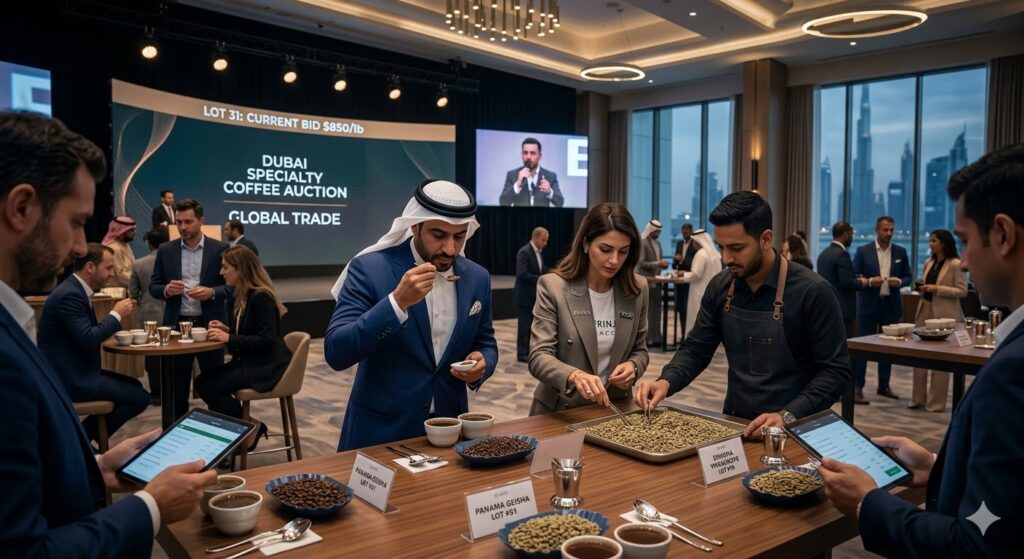
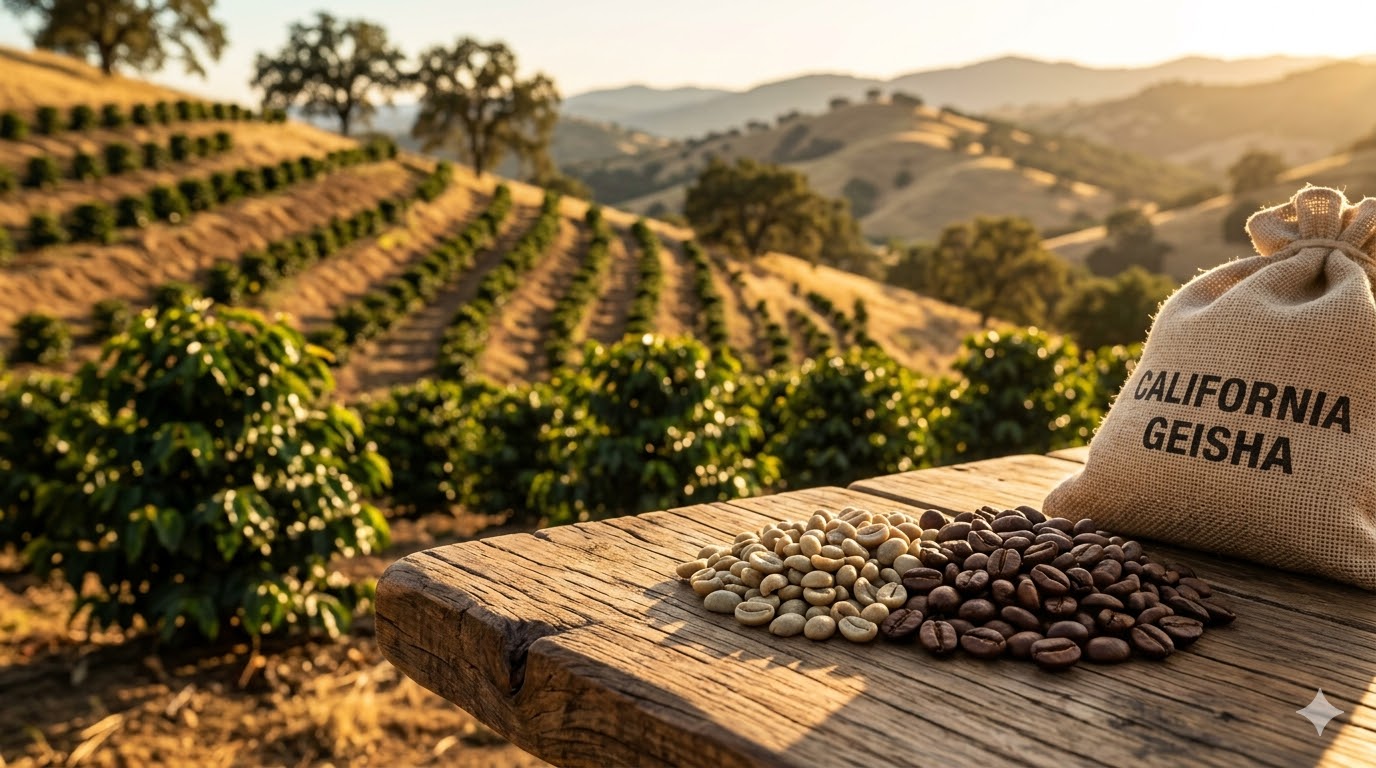
At the center of this movement is Jay Ruskey, founder of Frinj Coffee, who has spent more than two decades developing coffee cultivation in Southern California. His journey began in the early 2000s through collaboration with agricultural researchers, introducing high-quality varieties such as Geisha into Californian soil.
That long-term investment is now paying off. Ruskey’s California Washed Geisha achieved an impressive price of US$256 per kilogram at auction – a figure that places it firmly within the premium specialty tier.
Even more significant than the price is the validation. For years, U.S. coffee producers struggled to gain recognition, often excluded from international competitions due to their unconventional origin. The Dubai auction marked a turning point, opening the door for American-grown coffee to be evaluated alongside the world’s best.
Rethinking Terroir: Why California Works
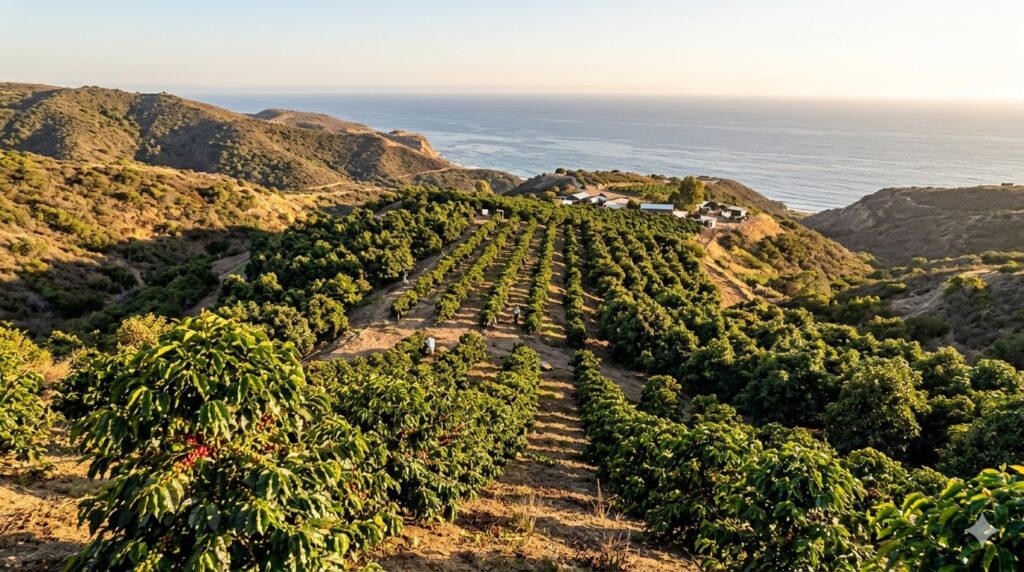
At first glance, the idea of growing coffee in the United States seems counterintuitive. Coffee trees typically thrive in tropical climates with stable temperatures, high humidity, and specific altitude ranges.
However, Southern California presents a unique agricultural environment that challenges these assumptions.
The region’s Mediterranean climate – characterized by wet winters and warm, dry summers – creates microclimates that can support coffee cultivation. Additionally, California’s diverse topography, influenced by ocean currents and varied elevations, allows farmers to fine-tune growing conditions in ways that mimic traditional coffee regions.
Interestingly, many of these coffee farms are located in areas historically used for citrus and avocado production. This agricultural legacy provides both the infrastructure and the soil expertise necessary to experiment with new high-value crops like coffee.
The result is not just viable production, but differentiation. Californian coffee offers distinct flavor profiles shaped by its unconventional terroir – a key advantage in today’s specialty market, where uniqueness often commands premium prices.

The Rise of Ultra-Premium Coffee
The success of U.S.-grown coffee must also be understood within the broader context of the specialty coffee market. In recent years, the industry has seen a surge in demand for ultra-premium, traceable, and rare coffees.
Consumers – particularly in advanced markets like Japan, South Korea, and the Middle East – are increasingly willing to pay for exclusivity, story, and innovation. Auctions have become critical platforms for showcasing these attributes, turning coffee into a luxury product rather than a commodity.
In this environment, origin stories matter. And few stories are as compelling as coffee grown outside the traditional Bean Belt, in a country better known for consumption than production.
The involvement of high-profile buyers further reinforces this trend. The winning bid for the Californian Geisha came from a Japanese specialty roastery, underscoring the global demand for unique, high-quality coffees regardless of origin.

Challenges: Scale, Cost, and Perception
Despite its early success, U.S. coffee production faces significant structural challenges.
First is scale. Compared to major producing countries, output in California remains extremely limited. This scarcity contributes to high prices but also restricts market impact.
Second is cost. Labor, land, and regulatory expenses in the United States are substantially higher than in traditional coffee-growing regions. This makes it difficult to compete in anything other than the premium segment.
Third is perception. The global coffee industry has deeply ingrained assumptions about where quality coffee can – and should – be grown. Changing these perceptions will take time, even with high-profile auction results.
However, these challenges may also be strategic advantages. Limited production reinforces exclusivity, while high costs push producers to focus on quality over quantity – aligning perfectly with the specialty market’s direction.
A Glimpse Into the Future of Coffee Origins
The emergence of U.S.-grown coffee raises a broader question: are we entering a new era of coffee production?
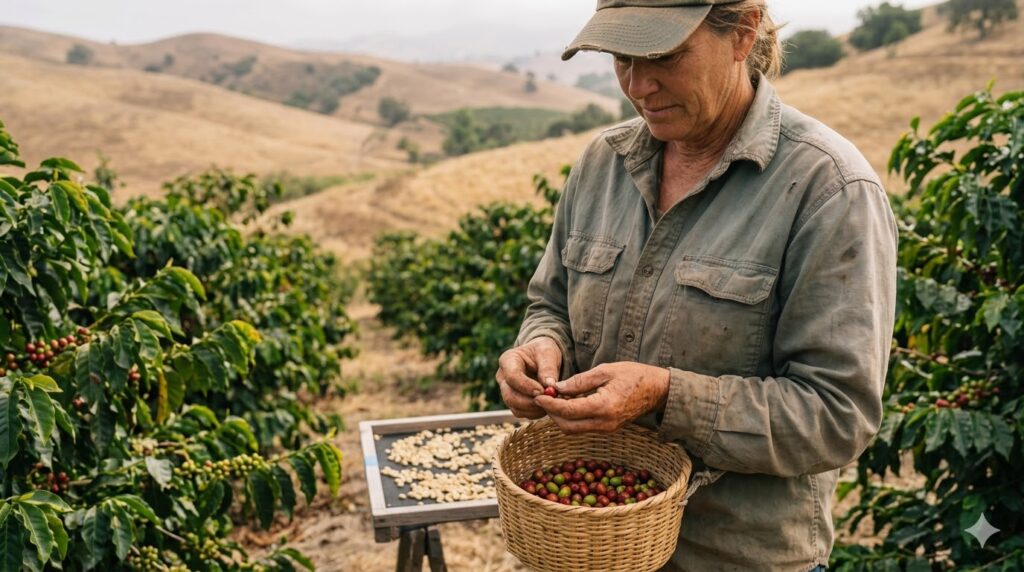
Climate change, technological innovation, and shifting consumer preferences are already reshaping the industry. As traditional growing regions face increasing environmental pressures, new origins may become more viable – and even necessary.
California’s success suggests that coffee cultivation is more adaptable than previously thought. With the right combination of climate, expertise, and investment, non-traditional regions could play a meaningful role in the future supply landscape.
More importantly, it signals a shift in how the industry defines “origin.” No longer limited by geography alone, origin is becoming a narrative – one that blends terroir, innovation, and identity.
Conclusion: From Outsider to Innovator

The rise of coffee grown in the United States is not about replacing traditional origins. Instead, it represents an expansion of the specialty coffee frontier.
What began as an agricultural experiment has evolved into a proof of concept: exceptional coffee can come from unexpected places.
For producers, it’s a lesson in innovation. For buyers, it’s an opportunity to diversify. And for the global coffee industry, it’s a reminder that even the most established systems can be reimagined.
In a market increasingly driven by differentiation and storytelling, “Born in the USA” may no longer be a novelty – but a competitive advantage.