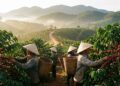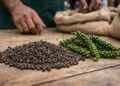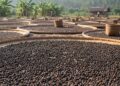
Vietnam’s coffee export revenue climbed to a record US $8.5 billion in 2025, underscoring how elevated global prices and gradual structural changes are strengthening the country’s position in the world coffee market.
The export figure, the highest ever recorded for Vietnam’s coffee sector, exceeded long-term government targets years ahead of schedule, according to industry data.
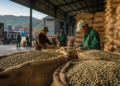
Vietnam shipped more than 1.5 million tonnes of coffee during the year. While export volumes were broadly stable, higher international prices, particularly for Robusta, lifted overall revenue at a time when supply remains tight across several major producing regions.
High Productivity Limits Supply Risk
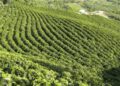
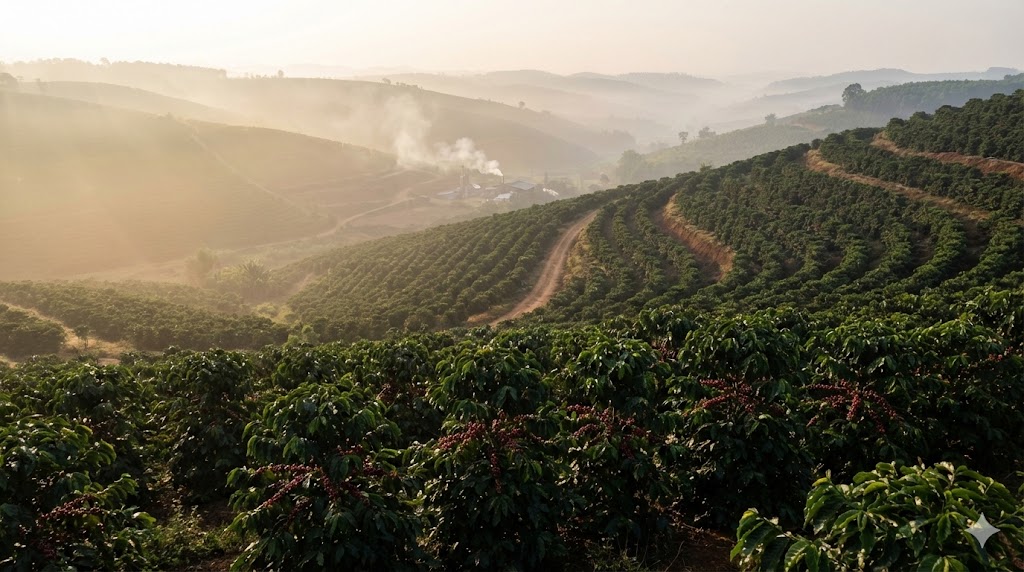
Vietnam continues to benefit from some of the highest coffee yields globally. Total plantation area stands at 710,590 hectares, with around 647,600 hectares under production in the 2024–2025 crop year.
Average yields exceed 3 tonnes per hectare, helping offset weather-related risks and limiting downside supply pressure. For global buyers, this productivity has reinforced Vietnam’s role as a key stabilising supplier in the Robusta market.
Processed Coffee Gains Share
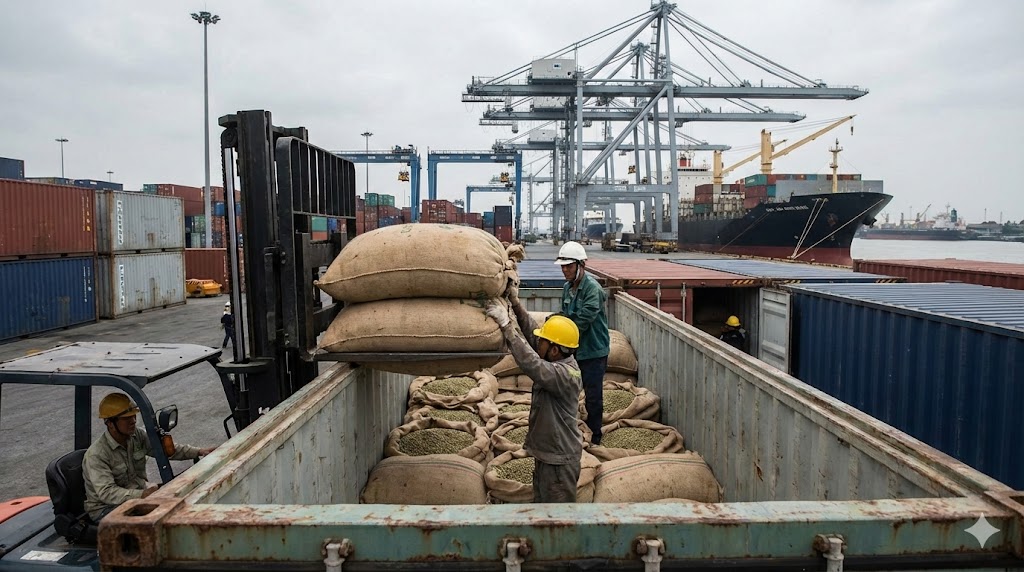
Export growth has not been limited to green beans.
Processed and deep-processed coffee products generated nearly US $1.4 billion in export revenue, reflecting expanding capacity in roasting and instant coffee, as well as rising demand from Asian and Middle Eastern markets.
The shift suggests Vietnam is gradually moving up the value chain, reducing its exposure to commodity price volatility while capturing higher margins.
Climate Adaptation Through New Varieties
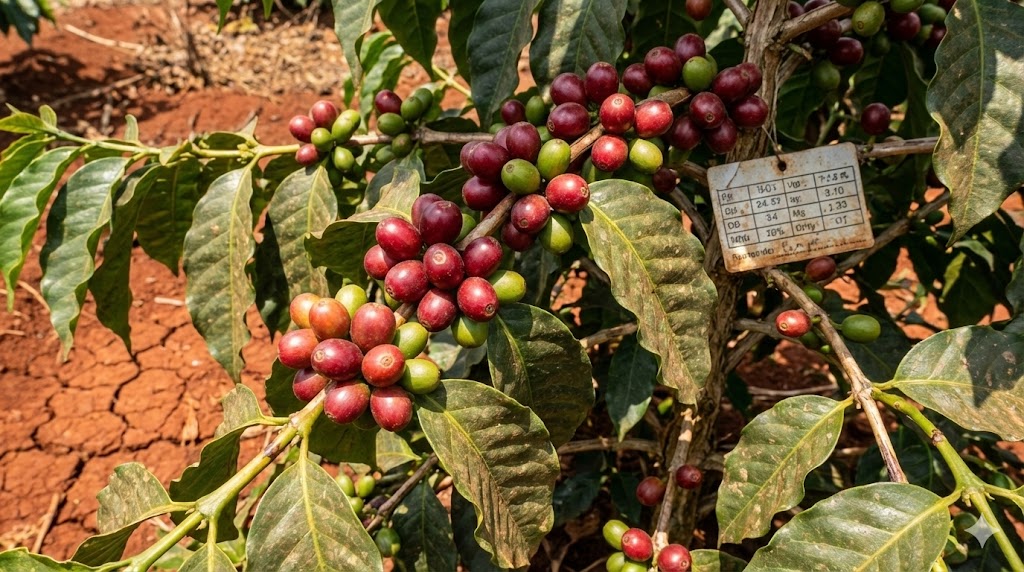
Climate risk remains a central concern for the industry, particularly in Vietnam’s Central Highlands, where prolonged dry seasons have intensified in recent years.
Researchers at the Western Highlands Institute of Agricultural Science and Technology (WASI) say newly developed coffee varieties designed to withstand drought and heat stress are showing strong results in field trials conducted in Gia Lai and Lâm Đồng provinces.
According to WASI, the new varieties are delivering yields of 4–4.5 tonnes per hectare, significantly above traditional plants, while maintaining large bean size and cup quality scores above 80, suitable for specialty-grade markets.
If adopted at scale, the varieties could help stabilise output and reduce irrigation costs, easing long-term production risks linked to climate change.
Regulation and Market Access
Vietnam’s export performance has also been supported by efforts to comply with stricter sustainability requirements, including the European Union Deforestation Regulation (EUDR).
Industry officials say improved traceability and farm-level data collection are helping exporters retain access to premium markets, even as regulatory compliance raises costs for smaller producers.
Outlook
With prices elevated and productivity holding firm, Vietnam’s coffee sector is expected to remain a key driver of global Robusta supply in the near term.
However, analysts caution that future growth will depend less on volume and more on value-added processing, climate resilience and regulatory compliance, as competition intensifies and weather risks persist.
For now, Vietnam’s record export year highlights how structural adjustments, rather than price rallies alone, are reshaping the country’s role in the global coffee trade.