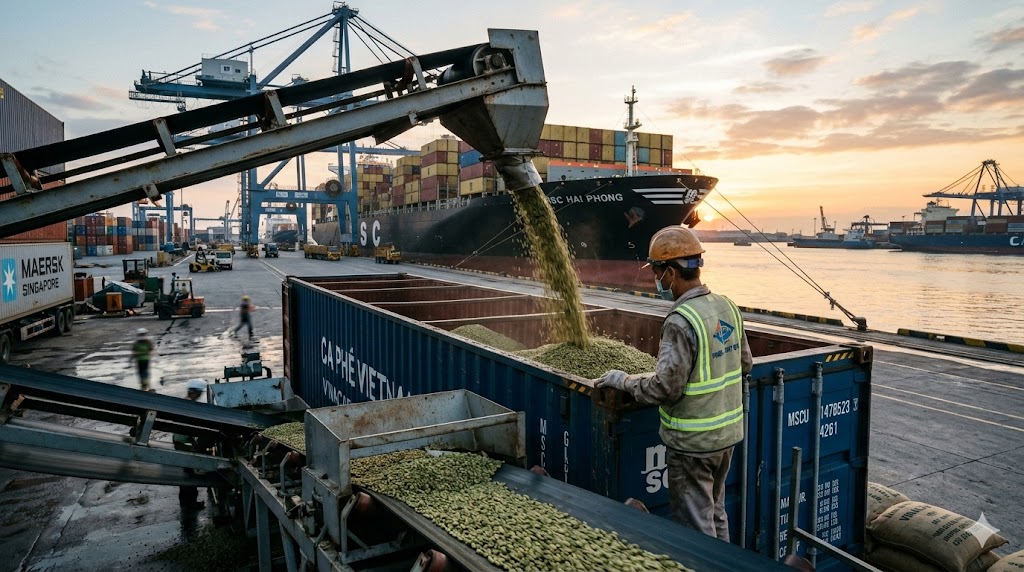
Early Indicators Signal Structural Strength, Not Just a Price Rally
Vietnam’s coffee sector is entering 2026 with remarkable momentum. After a historic performance in 2025, early trade data suggests the country is not merely riding a price spike, but consolidating its position as the world’s dominant Robusta supplier.
The key question for traders and exporters is no longer whether Vietnam had a strong year — that is already evident. The real issue is whether this export boom reflects a cyclical price rally or a deeper structural upgrade in value creation.
Current indicators point to the latter.
2025: A Landmark Year in Export Value
Vietnam’s coffee exports in 2025 reached approximately 1.59 million metric tons, generating nearly US$8.9 billion in revenue — the highest export value ever recorded for the sector.
What makes this milestone notable is not simply the increase in volume, but the extraordinary rise in export value. Despite global supply volatility, average export prices remained elevated throughout the year, hovering in the US$5,400–5,600 per ton range.
The surge was driven by three structural forces:
- Tight Robusta supply globally, particularly due to weather disruptions in Brazil.
- Strong demand from Europe amid sustained inflationary pressures.
- A strategic shift in Vietnam’s export mix toward higher-value shipments.
This was not merely a quantity story — it was a pricing power story.
Strong Start to 2026 Reinforces Momentum
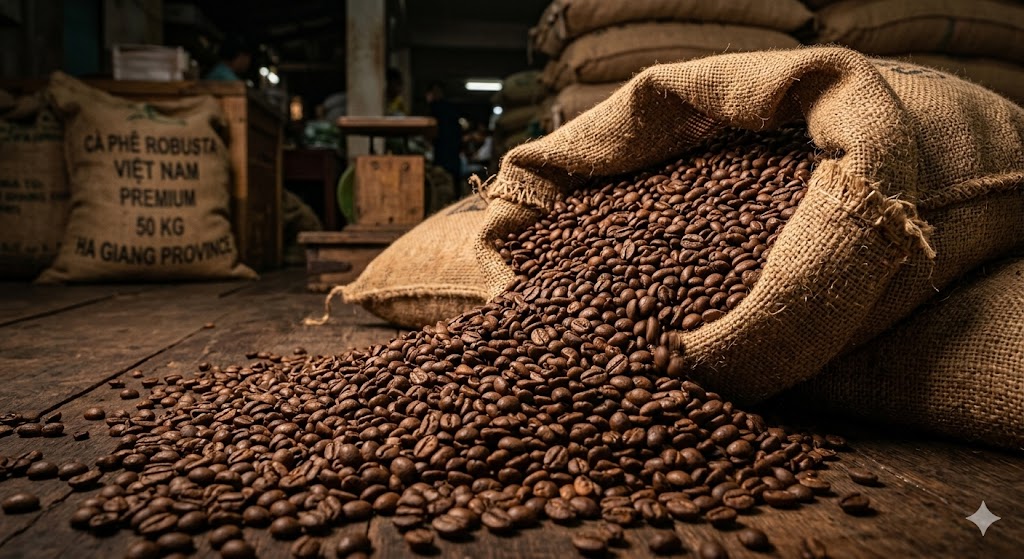
The first weeks of 2026 confirmed that global buyers remain active. Early shipment data indicates that Vietnam exported tens of thousands of tons within the first half of January alone, generating several hundred million dollars in turnover.
Market participants report that forward contracts remain active, particularly from:
- The European Union (still the largest destination market)
- The United States
- Key Asian importers including Japan and South Korea
Demand for Vietnamese Robusta remains firm, especially as global roasters continue blending strategies that favor cost-efficient beans amid uncertain consumer spending patterns.
Europe Remains the Anchor Market
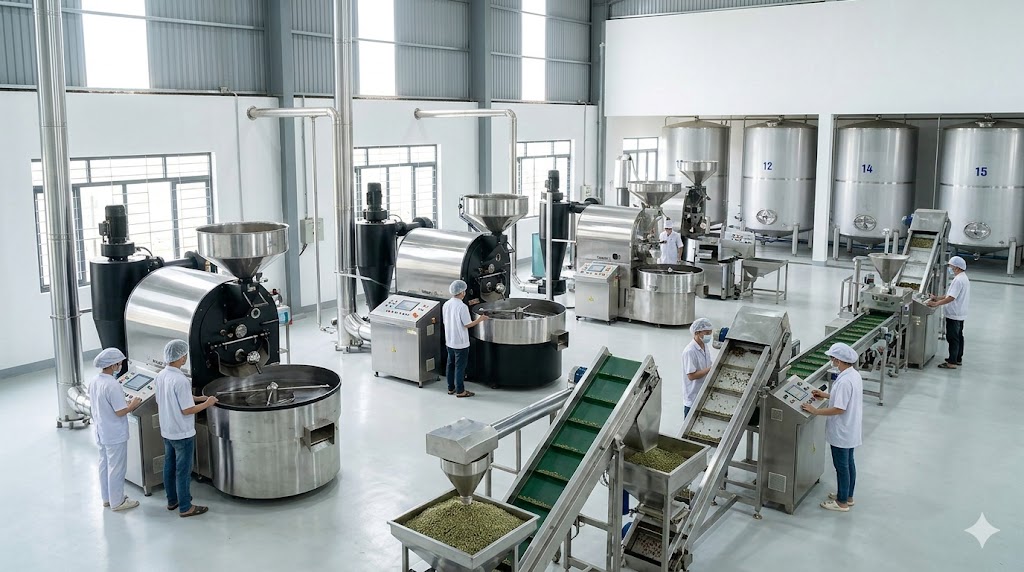
The EU continues to account for nearly half of Vietnam’s coffee exports. Germany, Italy, and Spain remain core destinations, driven by:
- Established roasting infrastructure
- Strong soluble coffee demand
- Blending needs amid constrained Arabica supplies
However, regulatory shifts — particularly sustainability and traceability requirements — are reshaping export strategies. Compliance with deforestation regulations and ESG standards is no longer optional; it is central to maintaining market access.
Vietnamese exporters that adapt early to these standards will likely command premium positioning over the medium term.
Price Outlook: Cooling, But Not Collapsing
While 2025 was characterized by exceptional price strength, 2026 may present a more balanced market.
Key factors to monitor include:
- Brazil’s Robusta production recovery
- Global inventory replenishment
- USD exchange rate movements
- Freight cost normalization
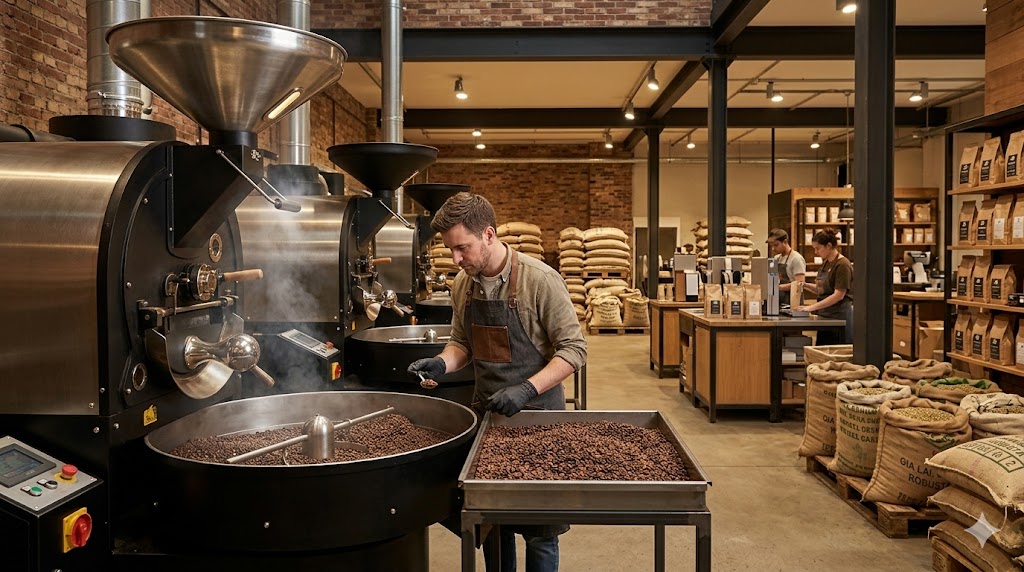
A moderate price correction would not necessarily undermine export value if Vietnam sustains its shift toward higher-value channels, including:
- Roasted coffee
- Instant coffee
- Specialty Robusta segments
The structural narrative suggests resilience, even if headline prices soften.
Structural Transformation: From Volume to Value
Vietnam’s coffee industry is gradually transitioning from a bulk commodity exporter to a more value-oriented supplier.
Three trends define this transformation:
- Increased investment in processing capacity.
- Growing domestic roasting industry.
- Greater focus on traceability and sustainability certification.
If this trajectory continues, export revenue growth will become less dependent on volatile global price cycles and more driven by product differentiation.

6–12 Month Outlook
Over the next year, the most probable scenario is:
- Stable to moderately lower global Robusta prices compared to 2025 peaks.
- Continued strong export volumes.
- Margin pressure for exporters lacking risk management tools.
- Improved competitiveness for firms with integrated supply chains.
In short, 2025 may have been a record year, but 2026 could prove whether Vietnam’s coffee boom is sustainable.