
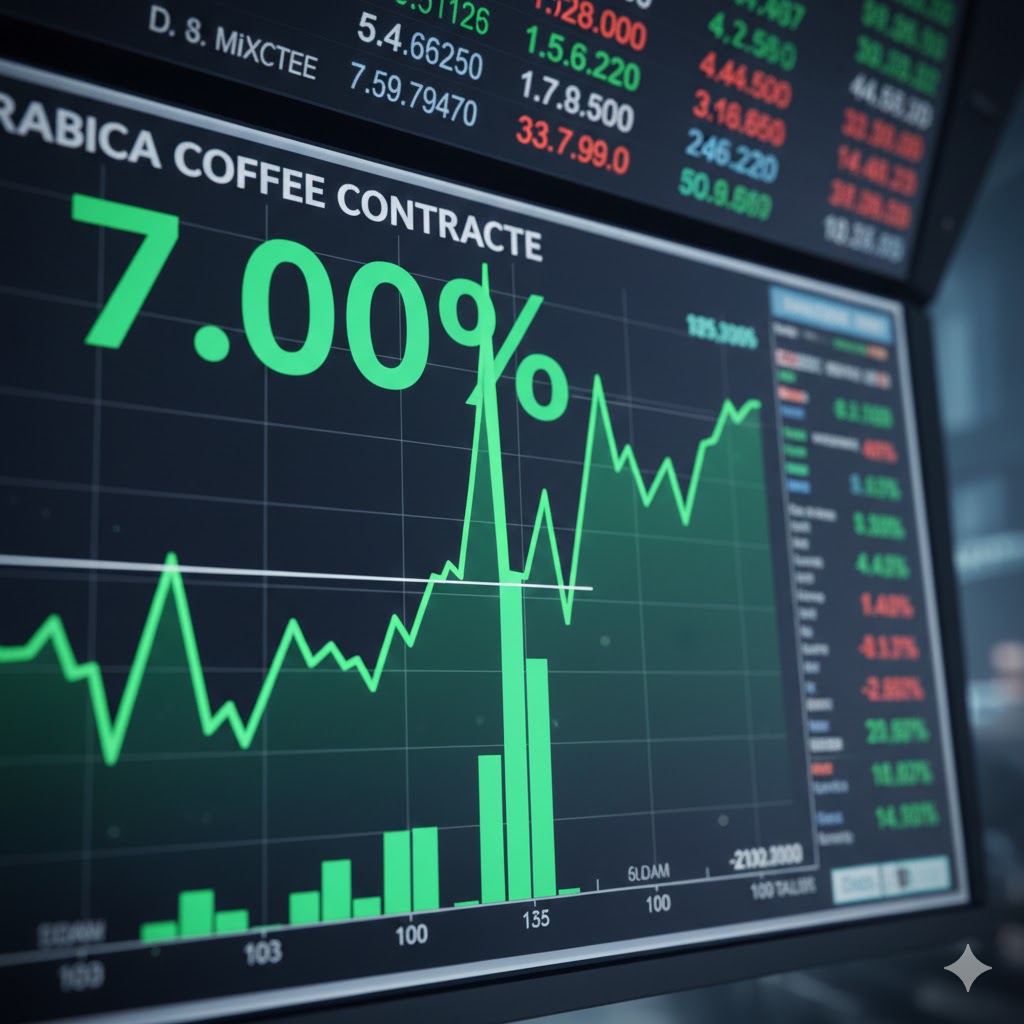
NEW YORK / NAIROBI – Feb. 25, 2026 – Global coffee futures jumped sharply today, with benchmark Arabica contracts on the Intercontinental Exchange (ICE) climbing ~7% in a single session – marking one of the largest one-day moves in nearly a year. Robusta futures also marched higher, pushing prices close to multi-month peaks as traders reacted to a confluence of structural supply concerns and shifting market dynamics.
The abrupt price move reverberated across commodity markets, sending ripples through roaster desks, exporting nations and trading rooms globally. Arabica’s gain of roughly 7% – erasing days of prior losses – reflects heightened tension around supply tightening and evolving trade flows.
What Happened – Price Action in Focus
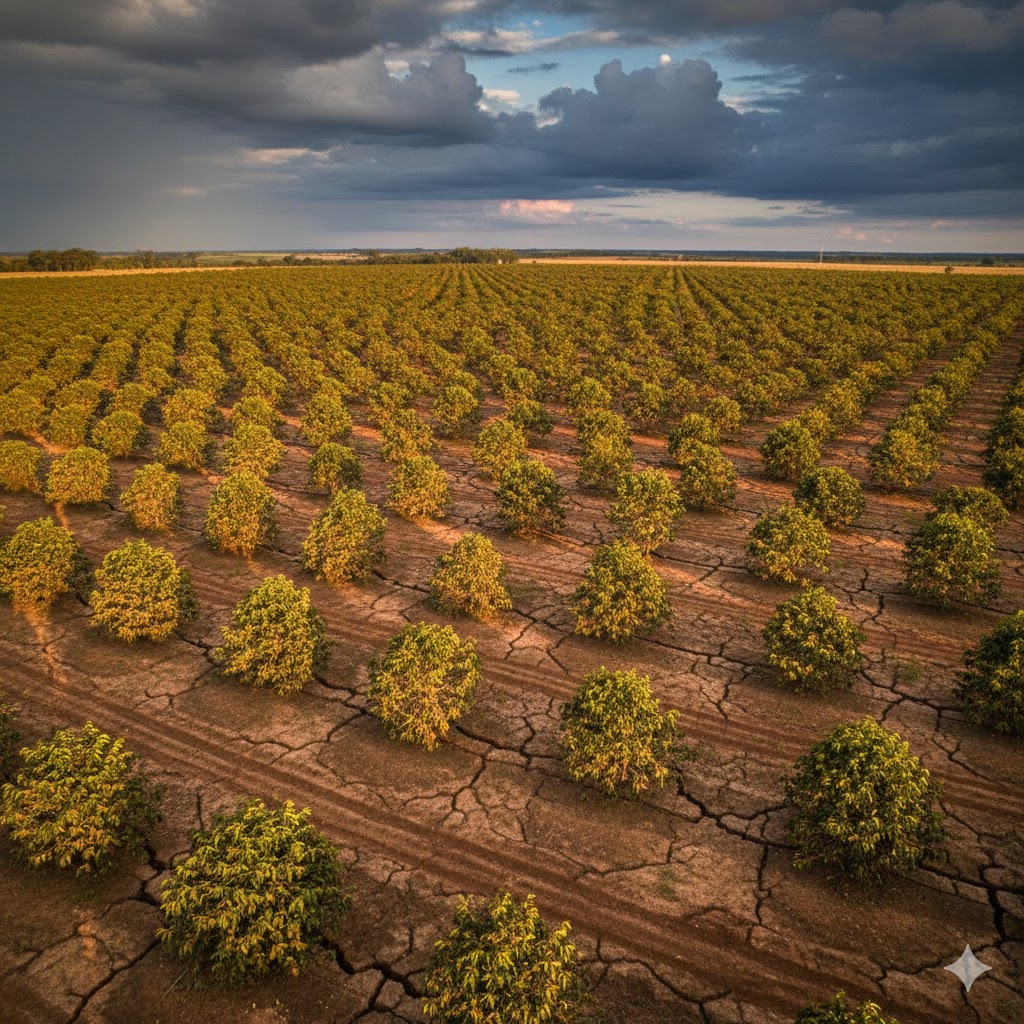
In today’s session, the most-active Arabica futures contract climbed approximately 7% from the prior close, carving out a strong intraday rally and testing resistance near recent highs. Robusta, the bean class heavily tied to instant coffee and European roasters, didn’t lag – gaining about 4–5% on strong technical momentum.
This move marks one of the sharpest short-term upticks in coffee futures since last year’s well-documented commodity swing, when Arabica futures spiked more than 6% amid panic buying on weather fears in Brazil.
Why It Happened – Drivers Behind the Surge
Traders and analysts point to three primary catalysts behind the sudden price acceleration:
1. Resurgent Supply Worries in Key Origins
After recent softening, signs of renewed dryness in Brazil – the largest global producer – have reignited supply risk premiums. With soil moisture deficits deepening in key Arabica regions, speculative bids have returned as traders price in tighter crop prospects.
2. Strategic Shifts in Origin Markets
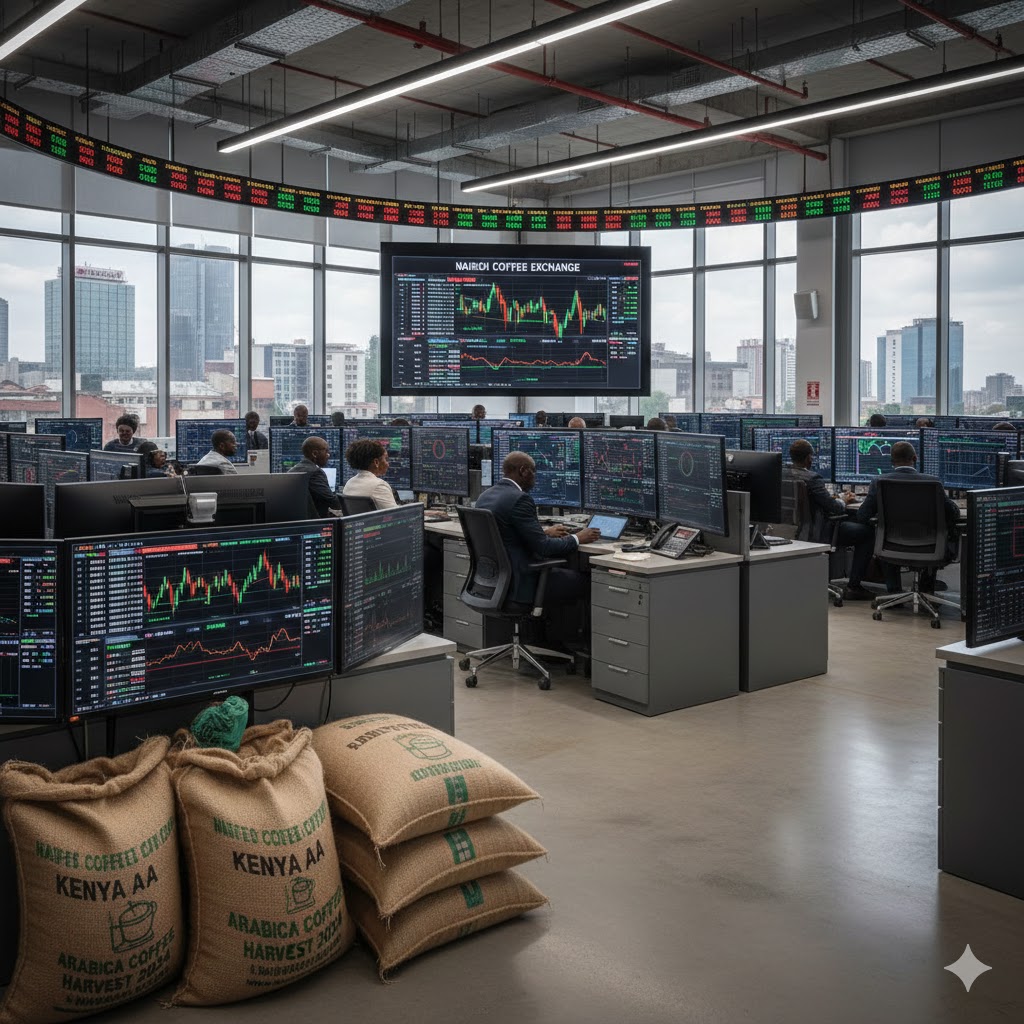
In Kenya, the launch of a new five-year strategic plan by the Nairobi Coffee Exchange underscores deeper structural changes in coffee trade infrastructure that could influence future flows. The plan – aimed at modernizing trading mechanisms, boosting transparency and digitizing price discovery – is expected to enhance market access for farmers but also concentrate global attention on East African supply signals.
3. Hedge Fund Positioning & Technical Triggers
With open interest climbing and volatility indicators firing, systematic and hedge fund players have been forced to adjust positions – compressing available liquidity and accelerating gains on breakout levels.
The combination of renewed supply risks plus technical momentum created fertile ground for today’s steep climb.
Market Reaction – From Desks to Roasters

Commodity desks reacted immediately, with several liquidity providers widening bid-ask spreads as volumes surged – a sign of traders repositioning amid rapid price change.
On the physical side, roasters and coffee buyers grew cautious:
- Some specialty roasters indicated they’re pulling forward purchases to lock in availability before further price escalation.
- European mills noted a sharp uptick in bid levels for nearby Robusta cargoes as arbitrage windows shifted.
Meanwhile, the U.S. dollar’s relative strength helped cushion some of the move for importers holding dollar-denominated futures, but volatility triggered fresh margin calls on long positions – amplifying intra-day swings.
In Nairobi and other origin hubs, coffee exporters reported heavy enquiry flows as traders sought to cover short positions ahead of the weekend.
Analyst Commentary – Interpretation Begins
Market strategists emphasized that today’s move is less about a single headline shock and more about accumulated structural risks:
“This is not a fleeting technical blip – we’re seeing realignment of risk premia across coffee markets,” said a senior analyst at a global commodities research firm.
“Supply concerns in Brazil are re-emerging at the same time that origin reforms – like Kenya’s new exchange strategy – are heightening market participation. That can be volatility-supportive.”
Another seasoned futures trader noted:
“Once you break certain technical levels on Arabica, algorithmic flows kick in. That momentum is what drove today’s sharp spike.”
Agronomic experts are also watching weather forecasts in key producing regions – early models suggest a possible shift to drier patterns in Brazil’s southern crop areas next month, which could compound tightness.
What to Watch Next – Key Signals for Traders
Market participants are now watching a tight set of indicators that could dictate the next leg of this move:
📌 Brazilian Weather Outlook
Rain models and ENSO forecasts could either amplify supply fears or provide relief – a key determinant of near-term price direction.
📌 Kenya Price Discovery & Digital Bidding Effects
The roll-out of Kenya’s digital trading platform may reconfigure bid/offer dynamics in East Africa, potentially reducing information asymmetry but also leading to more swift price adjustments.
📌 Open Interest & Commitment of Traders (COT) Data
Next week’s COT report will be critical for assessing whether commercial hedgers or speculators hold the dominant narrative.
📌 Currency Movements
With coffee priced in USD, dollar strength or weakness could either mute or magnify price swings seen in futures.
📌 Consumer Demand Metrics
Retail and roaster forward booking behavior will signal whether end users believe prices will continue higher or stall at current levels.
Bottom Line
Today’s ~7% surge in Arabica futures – a dramatic spike by any measure – underscores how tight supply fundamentals, reconfiguration of trading infrastructure in origin markets and technical positioning can converge into sharp price action.
Whether this turns into a sustained rally or a volatile spike followed by consolidation will hinge on upcoming weather trends, crop progress reports and global macro cues. Traders, roasters and supply chain participants alike are now bracing for an active trading window ahead.