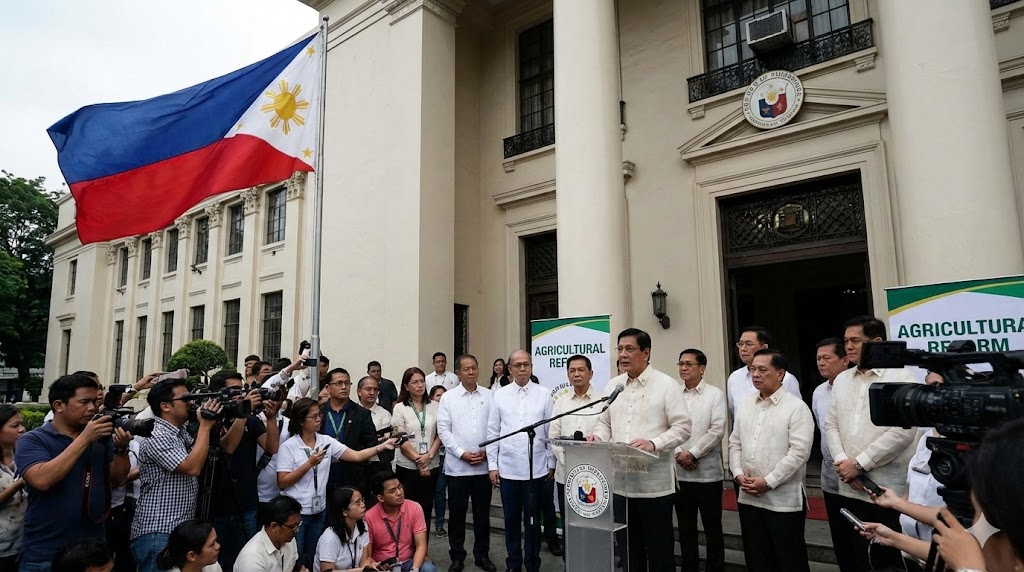
The Philippines’ coffee sector is entering a new phase of strategic focus as the government established a dedicated Coffee Industry Development Office (CIDO) to tackle chronic production challenges and better position the country in global markets. The move — formalized under Department Order No. 06 by the Department of Agriculture (DA) — consolidates previously scattered coffee programs, policies and funding, aiming to improve supply chain efficiency and competitiveness at a time of rising domestic and international demand.
With global coffee prices remaining sensitive to weather-related volatility and macroeconomic pressures such as inflation and supply disruptions linked to El Niño/La Niña patterns, stakeholders see focused governance as a catalyst for aligning local production capabilities with market opportunities. Traders, exporters and analysts have pointed to structural weaknesses in production that have left the Philippines heavily reliant on imports even as consumption growth accelerates.
A Sector in Need of Strategic Oversight
For years, the Philippine coffee industry has grappled with lagging production despite growing domestic consumption and export potential. According to DA officials, aging farmers, limited access to farm inputs, outdated equipment and weak infrastructure have suppressed yields and constrained quality improvements — issues that have forced import volumes to fill the gap. Recent reporting indicates that local production remains a small fraction of national demand, necessitating imports to balance the market.
Agriculture Secretary Francisco P. Tiu Laurel Jr. framed the new office as essential to reversing these trends. “We cannot keep talking about the promise of Philippine coffee while farmers grow older, yields stagnate and imports rise,” he said in announcing CIDO’s establishment. “By creating CIDO under focused leadership, we are putting strategy, funding and execution in one accountable office.”
From a commodity perspective, this shift mirrors broader industry movements toward focused oversight of key agricultural value chains, akin to dedicated governance seen in major exporting nations. By centralizing responsibility for domestic coffee strategy, the DA hopes to reduce production volatility and enhance responsiveness to international market dynamics.
Consolidation of Coffee Programs and Funding
Under the new framework, CIDO operates within the DA’s Office of the Undersecretary for Special Concerns and Official Development Assistance and will serve as the central hub for all coffee initiatives nationwide. Previously, coffee development activities were distributed across multiple units, resulting in fragmented implementation and accountability challenges.
CIDO’s mandate includes program planning, prioritization and coordination across DA bureaus and regional offices, monitoring achievements, and ensuring alignment with national agricultural priorities and official development assistance (ODA)-funded initiatives. All coffee development funds — including allocations under the High Value Crops Development Program and the Office of the Secretary — are now consolidated under its oversight.
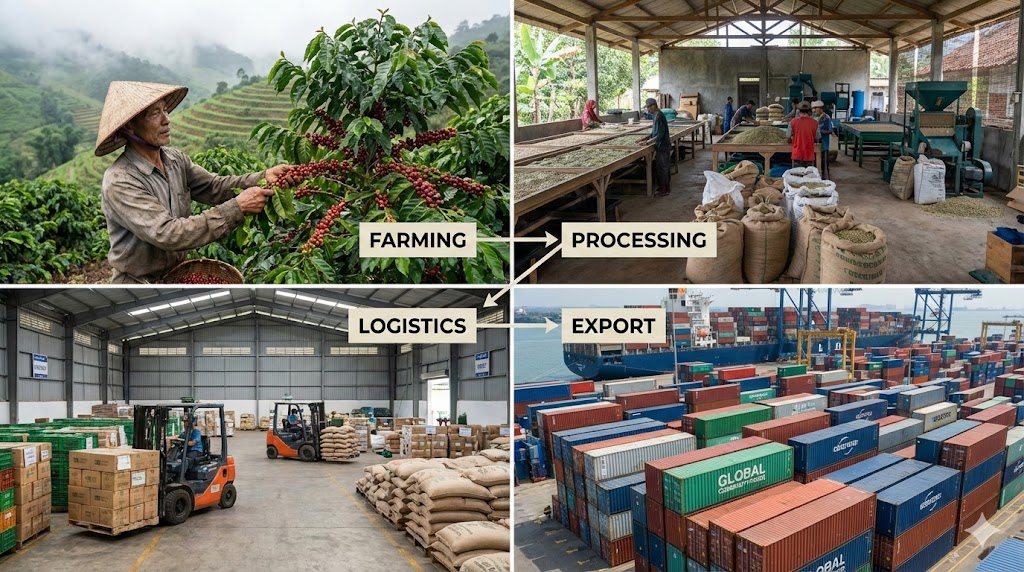
The office will also work closely with local governments, state universities, private firms and farmer groups to identify structural gaps in the value chain and recommend policy reforms. This coordination across public and private sectors is seen as fundamental to addressing bottlenecks from production through export readiness.
Implications for Supply and Export Competitiveness
Though the Philippines is not among the world’s top coffee exporters like Brazil or Vietnam, the establishment of CIDO could have important implications for how the nation’s coffee output responds to global market signals such as futures pricing and export data trends. With both arabica and robusta beans subject to global price influences — including speculative funds and macroeconomic factors like inflation pressure — strengthening domestic production could help stabilize PHL’s position in the region.
Current production challenges have kept the Philippines dependent on imports to meet local demand, a dynamic that exposes local consumers and roasters to price volatility in the ICE exchange and other benchmark markets. By building a more resilient production base, CIDO may contribute to smoother supply fundamentals and reduce the country’s vulnerability to external price shocks.
Exporters warn that without improvements in crop outlook and farm modernization, the country risks ceding market share to competitors whose production models are better aligned with climate variability and productivity improvements. As global players incorporate climate forecasts and investment into their long-term planning, the Philippines’ new office could help bridge the gap between local production realities and international demand expectations.

Market Commentary and Institutional Views
Industry analysts have largely welcomed the creation of CIDO, seeing it as a necessary evolution in governance for a sector that has long lacked focused strategic direction. “Centralized oversight and coordinated funding are critical to aligning production with market opportunities,” said a commodities strategist specializing in Southeast Asian agriculture.
Local exporters also emphasize the importance of enhancing quality and yield to attract premium markets, particularly for specialty arabica and resilient robusta varieties that command higher prices on international exchanges when supply tightness increases. By improving structural support, the country could not only expand its export footprint but also capture more value within its domestic supply chain.
However, some stakeholders caution that success will hinge on effective execution — particularly in modernizing farm practices, attracting younger farmers into the sector and upgrading processing and post-harvest facilities. Such improvements are essential if the Philippines is to move beyond its historical reliance on imports and fully leverage its coffee production potential.
Broader Macro Context and Price Signals
The new office’s launch comes at a time when global coffee markets are navigating price volatility driven by climate impacts, supply chain disruptions and macroeconomic uncertainties. El Niño/La Niña weather patterns continue to affect crop expectations in major producing regions, contributing to swings in futures markets that reverberate across supply chains. Traders and exporters monitor these conditions closely, using export data and crop outlook reports to inform hedging strategies amid ongoing inflation pressure on production costs.
For the Philippine market, bolstering domestic output could act as a buffer against some of these external pressures, offering greater supply predictability and potentially reducing reliance on imported beans when global fundamentals tighten.
Outlook: Building Resilient Supply Chains
Looking ahead, CIDO’s success will likely be measured by its ability to translate policy and funding into tangible improvements in coffee yields, farm productivity and export readiness. If executed effectively, the office could enhance Philippines’ competitiveness in a global market increasingly shaped by climate uncertainty and shifting demand patterns.
As the coffee industry continues to evolve, stronger domestic production systems may contribute to more stable pricing, improved quality standards and deeper integration with global trading mechanisms — a development that could ultimately reshape the country’s role in the wider commodity ecosystem. With a clear mandate and structured support, the Philippine coffee sector may be poised to transform long-standing challenges into sustained growth opportunities.