
Global Coffee Market at a Turning Point
The global coffee market entered 2026 after one of the most volatile price cycles in decades. Between 2024 and early 2025, coffee prices surged to historic highs due to climate disruptions, tight inventories, and strong demand. Arabica futures once touched over 440 US cents/lb in February 2025, the highest level ever recorded on the futures market. However, prices have since corrected as supply expectations improved.
At the same time, the coffee industry is now facing a new layer of uncertainty: geopolitical tensions in the Middle East. The escalating conflict involving Iran, Israel, and the United States has begun to disrupt global shipping lanes, energy markets, and commodity supply chains.
For coffee traders, exporters, and roasters, this geopolitical risk could become a decisive factor shaping price movements throughout 2026.
Vietnam’s Coffee Industry: A Dominant Force in the Global Supply Chain
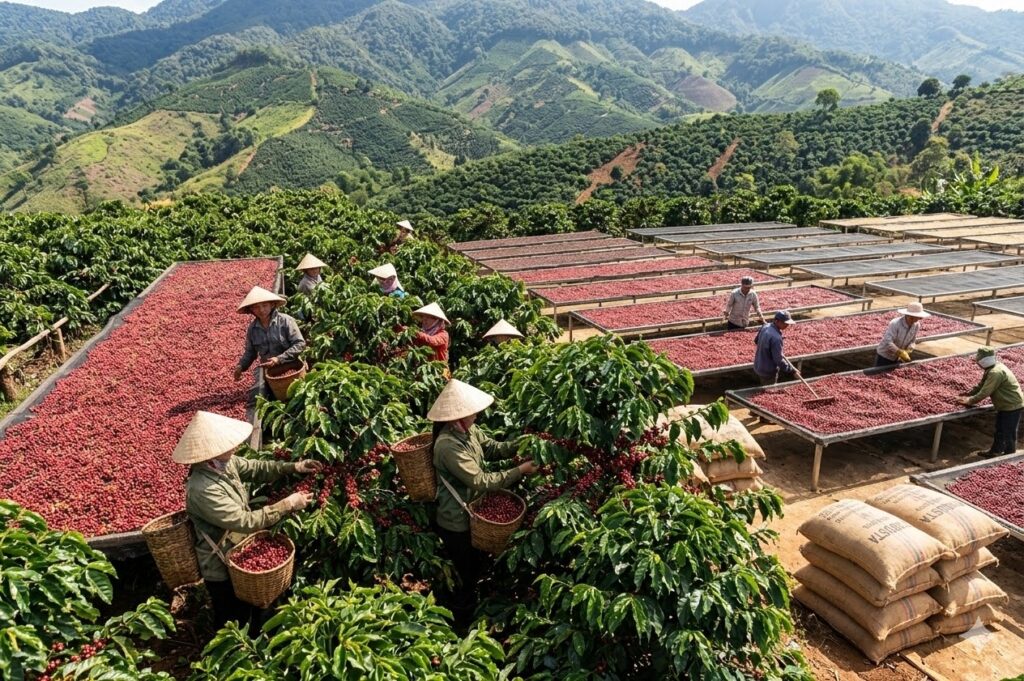
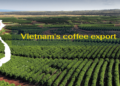
Vietnam remains the backbone of the global robusta market. As the world’s largest robusta producer, the country continues to expand both production and export capacity.
Recent data shows:
- Vietnam exported around 1.58 million tons of coffee in 2025, a year-on-year increase of 17.5%.
- Coffee export revenue approached US$9 billion, making it one of Vietnam’s most valuable agricultural commodities.
- In January 2026 alone, coffee exports generated over US$1.09 billion, with an average export price of US$5,450 per ton.
The strong export performance reflects continued global demand for robusta beans, especially from instant coffee manufacturers and roasters seeking cheaper alternatives to arabica.
At the same time, the 2025/26 Vietnamese crop is expected to reach around 29.4 million bags, a four-year high, thanks to improved weather conditions and expanded production areas.
This growing supply is one of the reasons why robusta prices have recently stabilized after the dramatic rally of 2024–2025.
The Middle East Conflict: A New Shock to Commodity Supply Chains
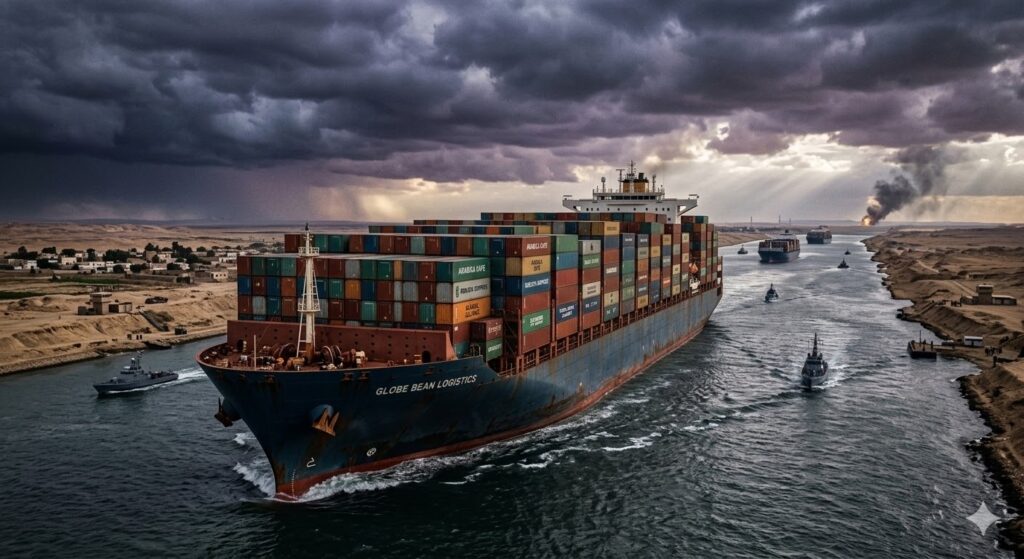
Although the Middle East is not a major coffee producer, it plays a critical role in global logistics and energy markets, both of which directly affect coffee prices.
The Strait of Hormuz, one of the most important maritime chokepoints in the world, handles about 20% of global oil shipments. Military tensions in the region have disrupted shipping routes and increased energy prices.
At the same time, thousands of cargo vessels have been delayed due to security risks and rerouting of maritime traffic.
For the coffee industry, these disruptions create several serious challenges:
1. Rising Shipping Costs
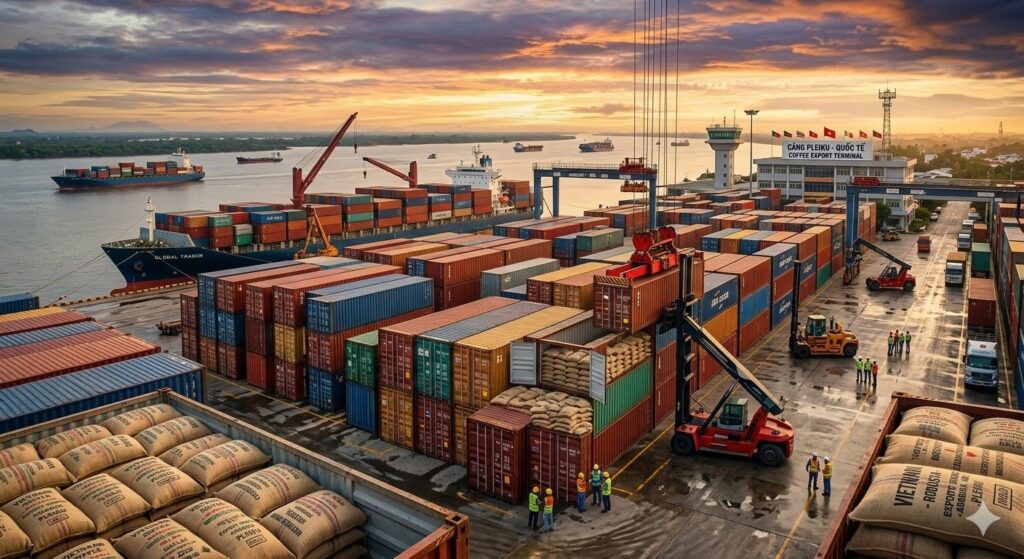
Coffee is a globally traded commodity heavily dependent on maritime logistics. When conflict increases insurance premiums and shipping risks, freight costs rise sharply.
War-risk insurance in the Middle East has already doubled or tripled in some cases.
This has a direct impact on exporters from Vietnam, Brazil, and Indonesia, whose coffee shipments to Europe and the Middle East rely on stable maritime routes.
2. Energy Prices and Production Costs
Coffee production and processing depend heavily on energy inputs: fertilizers, drying systems, roasting operations, and global transport.
With oil prices rising due to geopolitical tensions, energy costs across the coffee supply chain increase significantly.
Higher costs eventually translate into higher prices for consumers.
3. Supply Chain Delays
Shipping disruptions force companies to reroute vessels around Africa instead of passing through the Suez Canal or Middle Eastern waters.
This adds 10–20 days of transit time, tightening coffee availability in importing markets and increasing short-term price volatility.
Current Coffee Price Trends

Despite geopolitical risks, coffee prices have recently experienced corrections due to improving supply conditions.
Recent futures data shows:
- Arabica May 2026 contracts: about 293 US cents/lb.
- Robusta March 2026 futures: around US$3,789 per ton on the London exchange.
However, coffee markets remain extremely sensitive to macroeconomic shocks.
Short-term price declines have been linked to:
- larger Vietnamese export volumes
- improved Brazilian harvest expectations
- speculative fund liquidation in commodity markets.
But the underlying structural issues — climate change, supply concentration, and geopolitical risk — remain unresolved.
Structural Risks for the Coffee Market
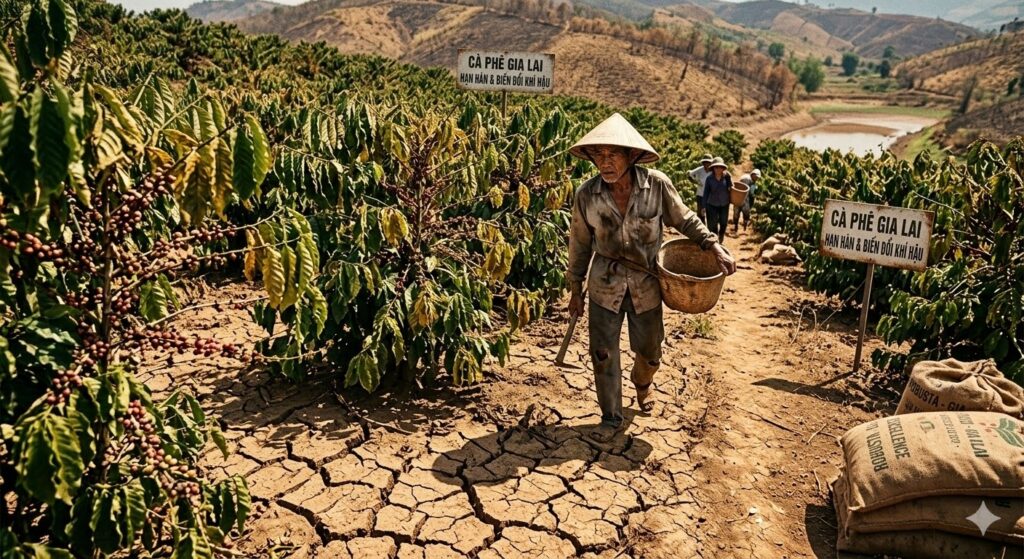
Beyond the Middle East conflict, several structural challenges will continue to shape coffee prices over the next decade.
Climate Change
Extreme weather events, including droughts in Vietnam and Brazil, have already reduced harvests in recent years. Climate volatility is expected to increase, creating periodic supply shortages.
Demand Growth
Global coffee consumption continues to expand, particularly in Asia and the Middle East.
Emerging markets such as China, India, and Southeast Asia are becoming major drivers of demand, putting pressure on long-term supply.
Market Concentration
The global coffee supply remains heavily concentrated in a few countries:
- Brazil (largest arabica producer)
- Vietnam (largest robusta producer)
- Colombia and Indonesia
Any disruption in these regions can quickly trigger price spikes.
Coffee Price Forecast for 2026–2027
Based on current supply projections and geopolitical risks, several scenarios could unfold.
Base Scenario (Most Likely)
If shipping disruptions remain limited and production increases in Vietnam and Brazil continue, coffee prices may stabilize within a moderate range.
Expected ranges:
- Arabica: 240 – 320 cents/lb
- Robusta: US$3,300 – US$4,200 per ton
Bullish Scenario
If Middle East conflicts escalate and global shipping routes face prolonged disruptions, coffee prices could rise sharply due to logistics bottlenecks and higher energy costs.
In this scenario:
- Arabica could exceed 350 cents/lb
- Robusta could return to above US$4,500 per ton
Bearish Scenario
If global harvests improve significantly and speculative capital exits commodity markets, prices may temporarily decline.
However, structural supply constraints mean prices are unlikely to collapse to pre-2021 levels.

Conclusion
The global coffee market is entering a period of heightened complexity. While improving harvests in Vietnam and Brazil may temporarily ease supply pressure, geopolitical tensions in the Middle East are introducing new risks to logistics, energy costs, and global trade flows.
For Vietnam — the world’s leading robusta exporter — this environment presents both opportunities and challenges. Strong global demand and high export prices offer significant economic upside, but rising freight costs and geopolitical instability could erode margins across the supply chain.
Ultimately, coffee prices in the coming years will not be determined solely by harvest sizes. Instead, they will increasingly reflect a combination of climate volatility, geopolitical risk, and global logistics disruptions.
In a world where supply chains are fragile and demand continues to grow, coffee may remain one of the most strategically sensitive agricultural commodities of the decade.